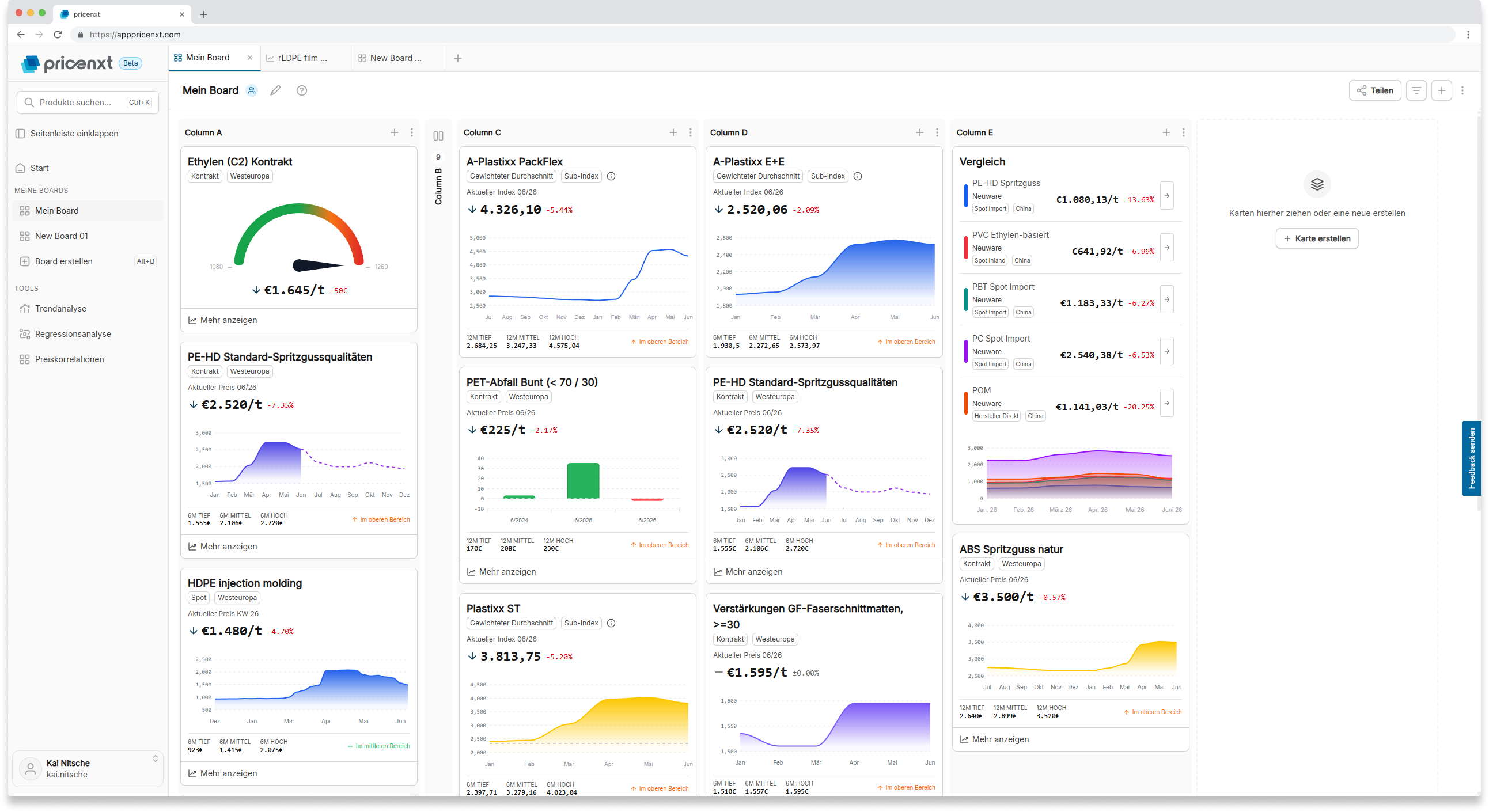


ReinforcementsPrice data available since 2010
Material price data for reinforcements
Price data for Reinforcements GF helps assess wind energy, automotive and lightweight construction applications more systematically, using price series, and interactive charts.
Companies that rely on pricenxt









What are reinforcements?
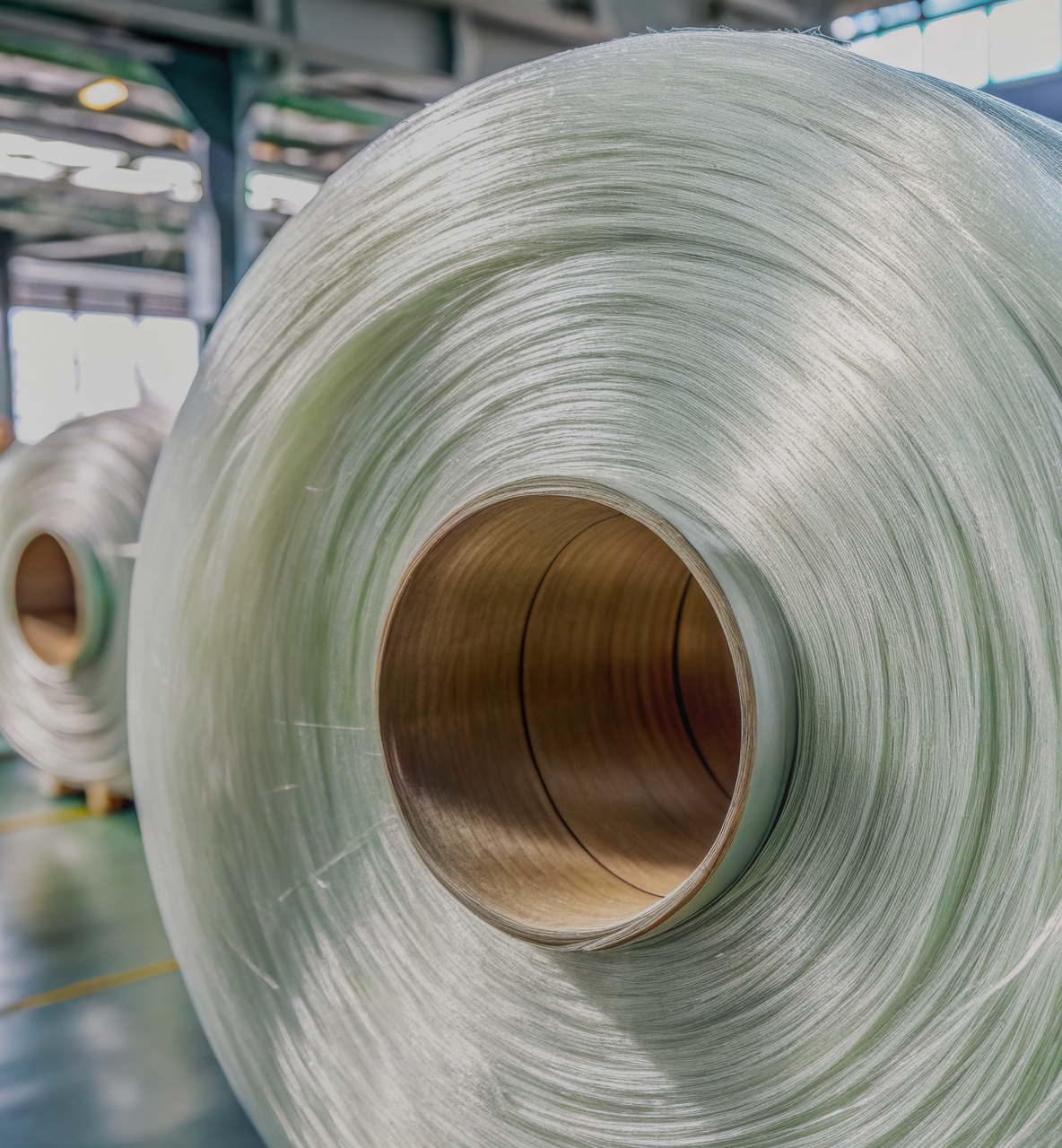
Glass-fibre products whose fibres carry the load in a composite made up of a matrix material (resin or thermoplastic) and reinforcement.
Four types are reported: standard chopped strand mats (CSM) ≥30 tex, high-grade chopped strand mats <30 tex, direct rovings ≥2400 tex and assembled rovings ≥2400 tex (tex = g/1000 m).
Four types are reported: standard chopped strand mats (CSM) ≥30 tex, high-grade chopped strand mats <30 tex, direct rovings ≥2400 tex and assembled rovings ≥2400 tex (tex = g/1000 m).

Where are reinforcements used?
Chopped strand mats for hand lay-up and press processes, direct rovings for winding and pultrusion, assembled rovings for woven, and non-crimp fabrics and pressed mouldings – above all in wind energy, automotive, and lightweight construction.
Recycled, revalued, repriced: PCR plastics to 2032
The trend in prices for post-consumer plastic recyclate in Europe up to 2032. A forecast based on three scenarios.
Top 5 application markets for reinforcements
pricenxt delivers structured price data and analysis views for reinforcements, supporting a consistent basis for planning, procurement, and pricing.
-
Energy infrastructurePipes, cables, and connection technology in energy infrastructure use large volumes of HDPE and PVC – price movements feed straight into project costs.Learn more
-
BodyBumpers, wings and add-on parts consist of PP compounds, the polyamides, and fibre-reinforced materials – their prices determine the component costs.Learn more
-
Structural componentsStructural components have to carry loads – fibre-reinforced plastics as well as resin and glass fibre raw materials determine both strength and cost here.Learn more
-
AerospaceCabin, window and panelling components in aerospace use PC, PMMA, and PA – transparent price data underpins the calculation.Learn more
-
Sports & leisureSports and leisure products use PP, PE, ABS, PA, and EVA – price movements feed straight into light, robust components.Learn more





pricenxt. Try it for 30 days.
Use pricenxt free for 30 days. Analyse price movements, forecasts and much more.
What makes reinforcements distinctive?
Reinforcements GF determine the mechanical performance of composites. Price series by fibre type help place developments for wind energy, automotive, and lightweight construction in context.
Material and price logic
Chopped strand mats, direct rovings, and SMC rovings cover different processing routes. Wind energy and automotive demand shapes price formation.
- Fibre types: chopped strand mats, direct rovings (≥2400 tex), and assembled SMC rovings.
- Trade types: contract prices form the price basis for planning and calculation.
- Performance relevance: determines the stiffness, strength, and impact resistance of the composite.

Market relevance
Reinforcement prices are relevant for companies that purchase, cost or have to account for glass-fibre and lightweight construction materials in price negotiations.
- Procurement: teams can factor price movements into their purchasing plans at an early stage.
- Pricing: price series support structured discussions on material costs and price adjustment mechanisms.
- Controlling: price histories help document cost assumptions in a traceable way.
Analysis in pricenxt
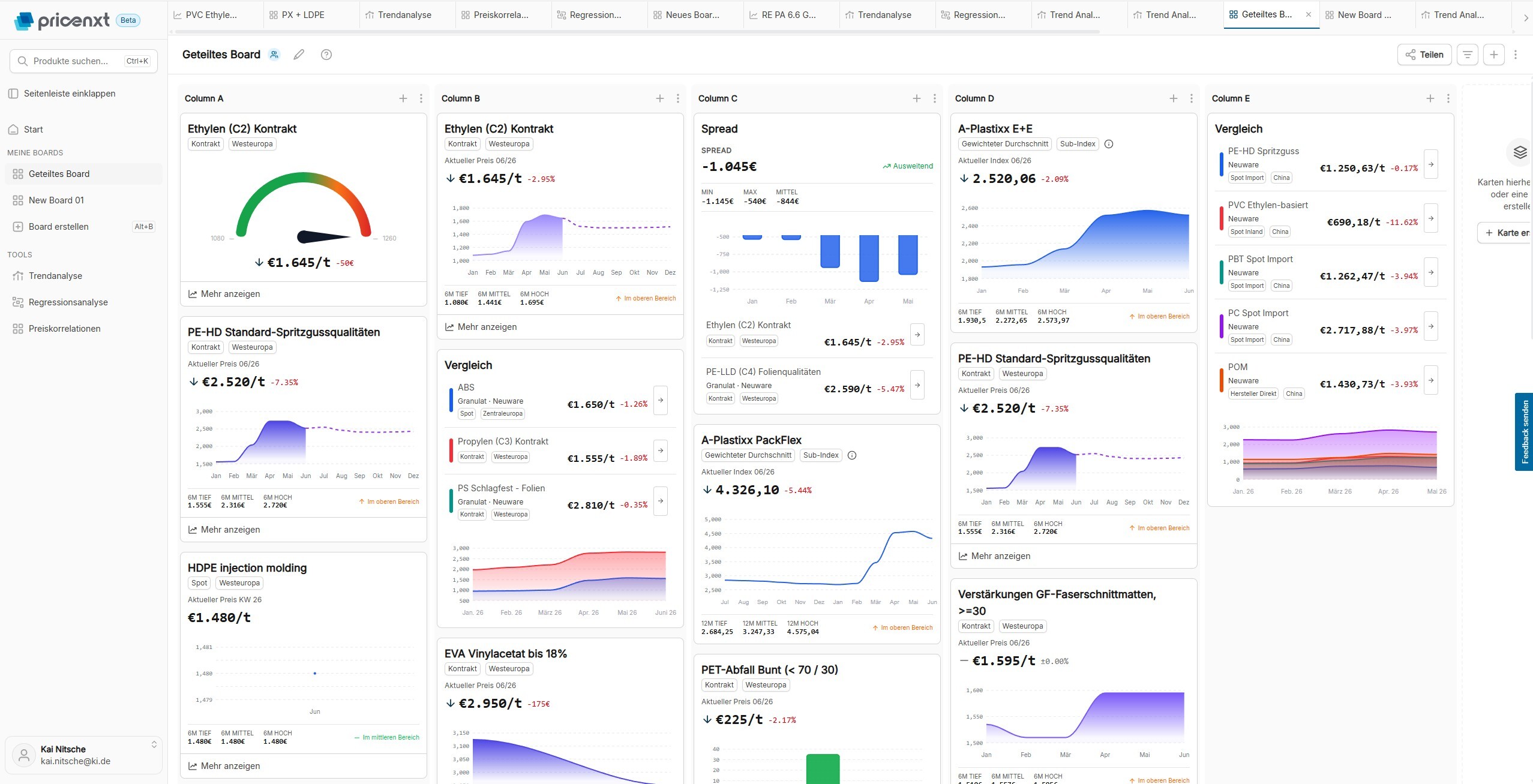
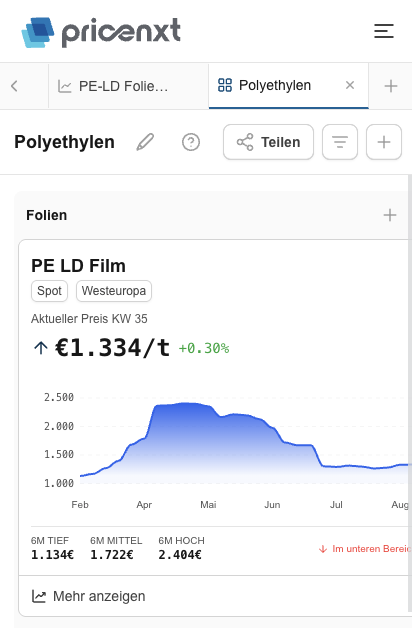
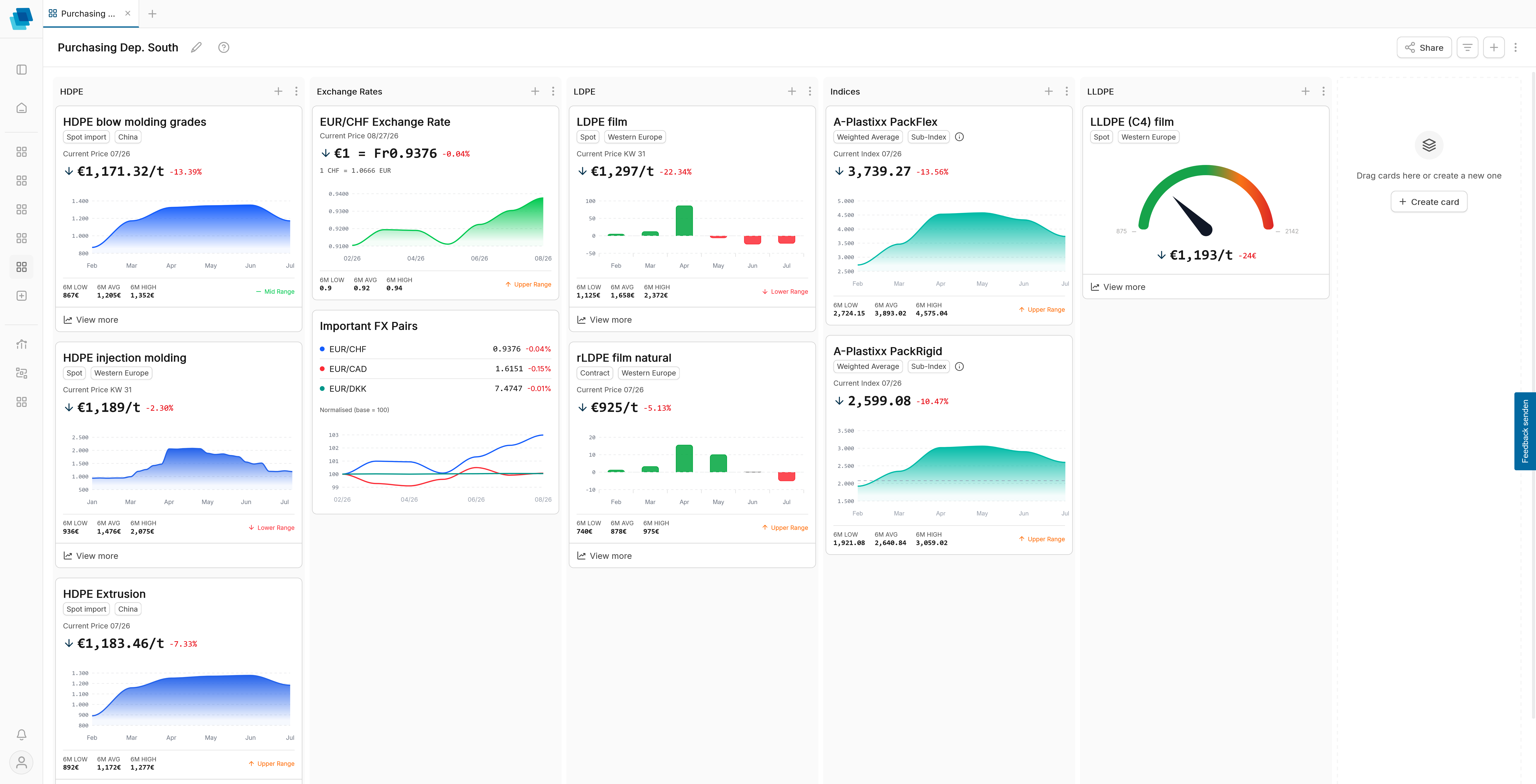
In pricenxt, reinforcement price data can be analysed in a structured way using configurable filters, interactive charts, and boards.
- Variant comparison: different price series can be set against one another in a single chart.
- Period analysis: you choose the observation period freely and add trend lines or regressions.
- Saving to boards: relevant analyses can be saved as a card on a board and shared.
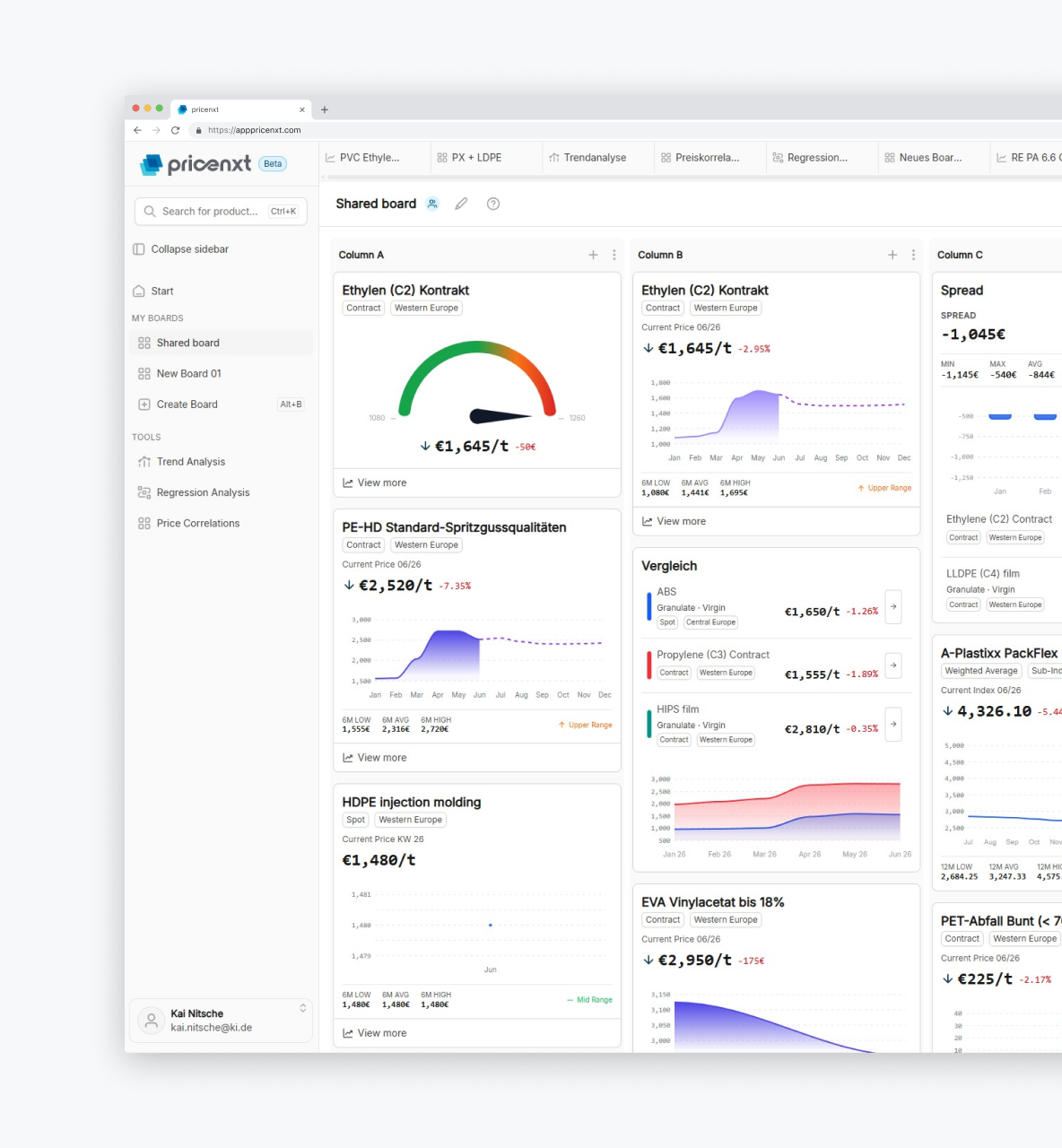
Track market trends. Free of charge.
Use our Plastixx and A-Plastixx indices free of charge, with no time limit. Track price developments for standard and engineering plastics, as well as across selected application markets.