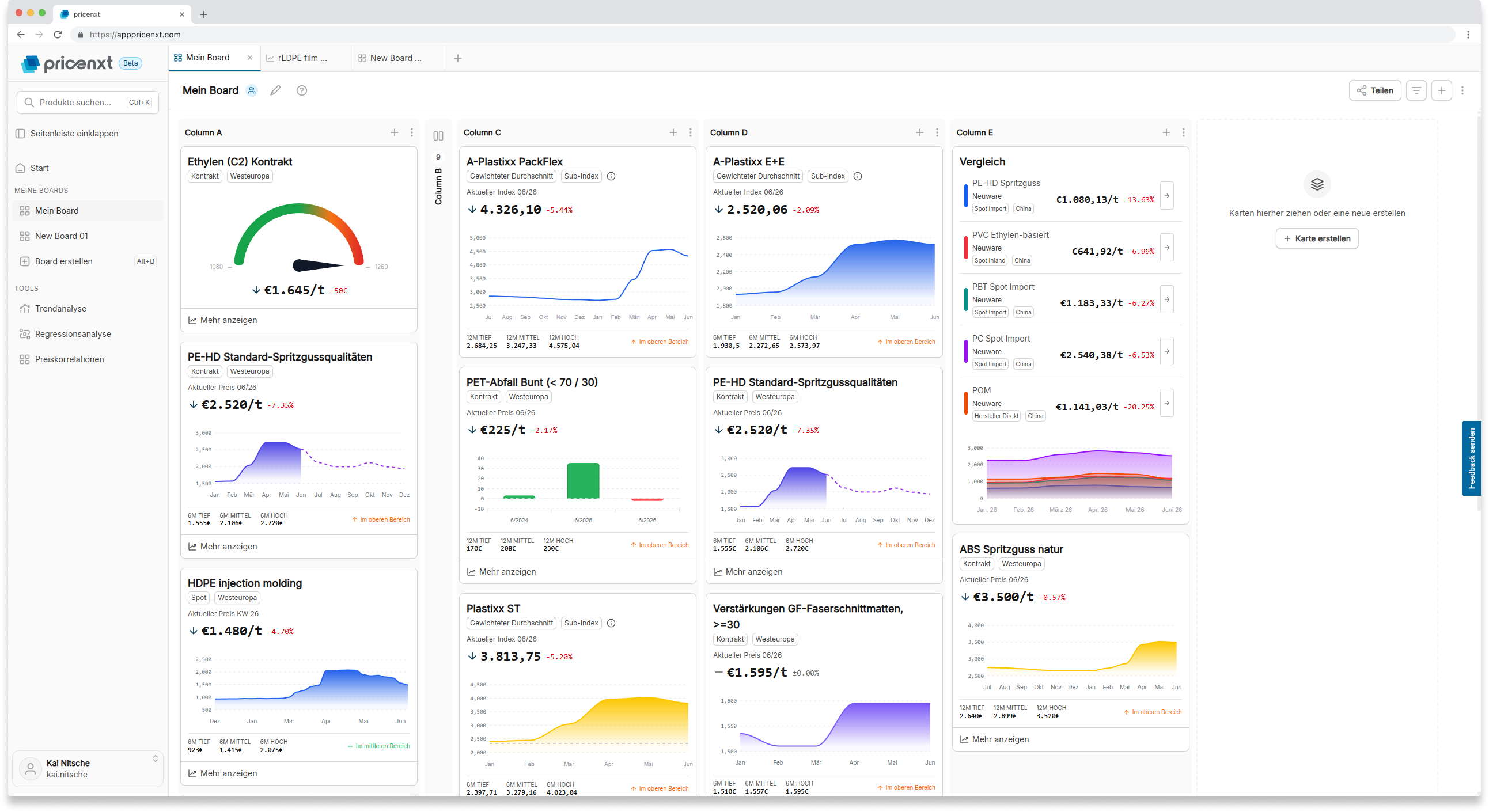


Base chemicalsPrice data available since 1991
Material price data: base chemicals
Price data for the petrochemical base chemicals bring together the cost base of the olefins and aromatics chains and help put the cost base of downstream materials into context.
Companies that rely on pricenxt









What are base chemicals?
Base chemicals are the petrochemical building blocks of plastics value creation.
Naphtha cracking yields olefins such as ethylene, propylene and butadiene, together with aromatics such as benzene and paraxylene. Styrene also counts among the important base chemicals, but it does not come directly out of the cracker: it is produced synthetically from benzene and ethylene (via ethylbenzene). These base chemicals set the cost base of almost all downstream polymers – from the standard thermoplastics through the engineering thermoplastics to the reactive components of the polyurethanes (isocyanates and polyols) and the composites (UP ortho resins, medium reactive).
For procurement, pricing, and commercial teams, this overview brings the relevant base chemicals price series together in one place.
Naphtha cracking yields olefins such as ethylene, propylene and butadiene, together with aromatics such as benzene and paraxylene. Styrene also counts among the important base chemicals, but it does not come directly out of the cracker: it is produced synthetically from benzene and ethylene (via ethylbenzene). These base chemicals set the cost base of almost all downstream polymers – from the standard thermoplastics through the engineering thermoplastics to the reactive components of the polyurethanes (isocyanates and polyols) and the composites (UP ortho resins, medium reactive).
For procurement, pricing, and commercial teams, this overview brings the relevant base chemicals price series together in one place.
What are base chemicals relevant for?
Olefins are the basis for polyethylene, polypropylene, and PVC; aromatics and styrene for polystyrene, PET, polycarbonate, the polyamides, and other engineering thermoplastics.
Base chemicals prices therefore feed into practically all packaging, construction, automotive, and E&E applications.
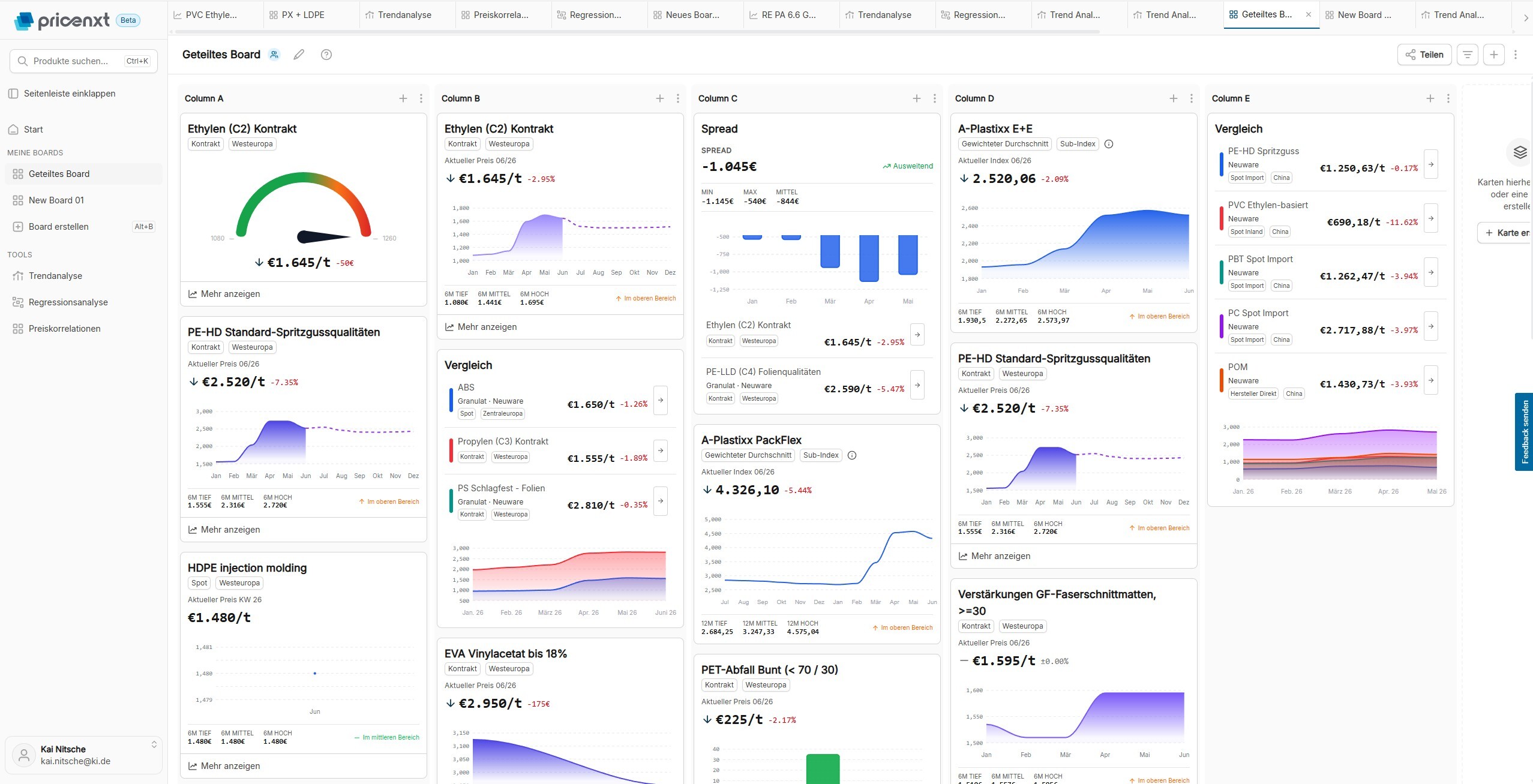
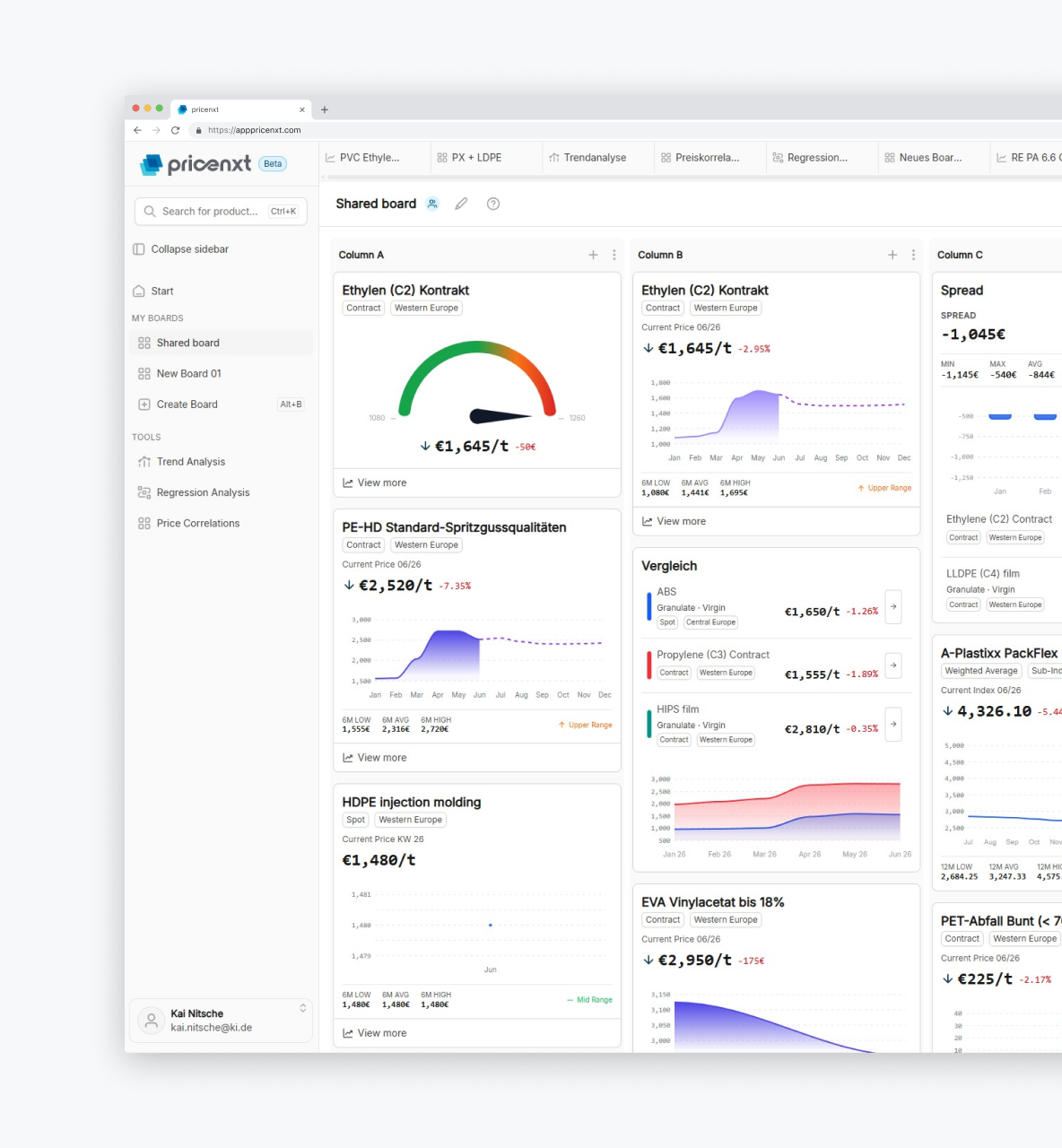
In pricenxt, the individual price series can be set against one another and brought together on boards.
Base chemicals prices therefore feed into practically all packaging, construction, automotive, and E&E applications.
In pricenxt, the individual price series can be set against one another and brought together on boards.

Recycled, revalued, repriced: PCR plastics to 2032
The trend in prices for post-consumer plastic recyclate in Europe up to 2032. A forecast based on three scenarios.
Material types within base chemicals
This group brings together the individual base chemicals pages – among them ethylene, propylene, benzene, butadiene, styrene, paraxylene, and naphtha. Each tile leads straight to the price series for that base chemical.
-
propyleneAnalyse propylene prices in pricenxt with price series, charts, and boards – for procurement, pricing, and transparent planning along the C3 chain.Learn more
-
ethyleneAnalyse ethylene prices in pricenxt with price series, charts, and boards – for procurement, pricing, and transparent planning along the C2 chain.Learn more
-
benzeneAnalyse benzene prices in pricenxt with price series, charts, and boards – for procurement, pricing, and transparent planning along the aromatics chain.Learn more
-
butadieneAnalyse butadiene prices in pricenxt with price series, charts, and boards – for procurement, pricing, and transparent planning along the C4 chain.Learn more
-
styreneAnalyse styrene prices in pricenxt with price series, charts, and boards – for procurement, pricing, and transparent planning along the styrene chain.Learn more
-
paraxyleneAnalyse paraxylene prices in pricenxt with price series, charts, and boards – for procurement, pricing, and transparent planning along the PET chain.Learn more
-
naphthaAnalyse naphtha prices in pricenxt with price series, charts, and boards – for procurement, pricing and transparent planning of the cracker cost base.Learn more



pricenxt. Try it for 30 days.
Use pricenxt free for 30 days. Analyse price movements, forecasts and much more.
What sets the base chemicals apart?
Base chemicals stand at the start of value creation. The combination of contract and spot references makes them especially important for cost models and market monitoring.
Basis of value creation
Olefins and aromatics are the shared cost base of the polymer chains. Movements have a broad effect on downstream materials.
- Olefins: ethylene, propylene, and butadiene from the cracker.
- Aromatics: benzene, styrene, and paraxylene for PS, PET, and engineering plastics.
- Downstream relevance: shape material costs in packaging, construction, automotive, and E&E.

Market relevance
Prices for base chemicals are relevant for companies that purchase, cost or have to allow for feedstock-related materials in price negotiations.
- Procurement: teams can factor price movements into their purchasing plans at an early stage.
- Pricing: price series support structured discussions on material costs and price adjustment mechanisms.
- Controlling: price histories help document cost assumptions in a traceable way.
Analysis in pricenxt
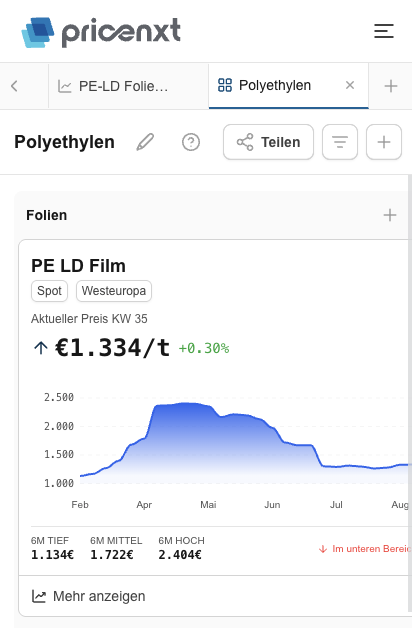
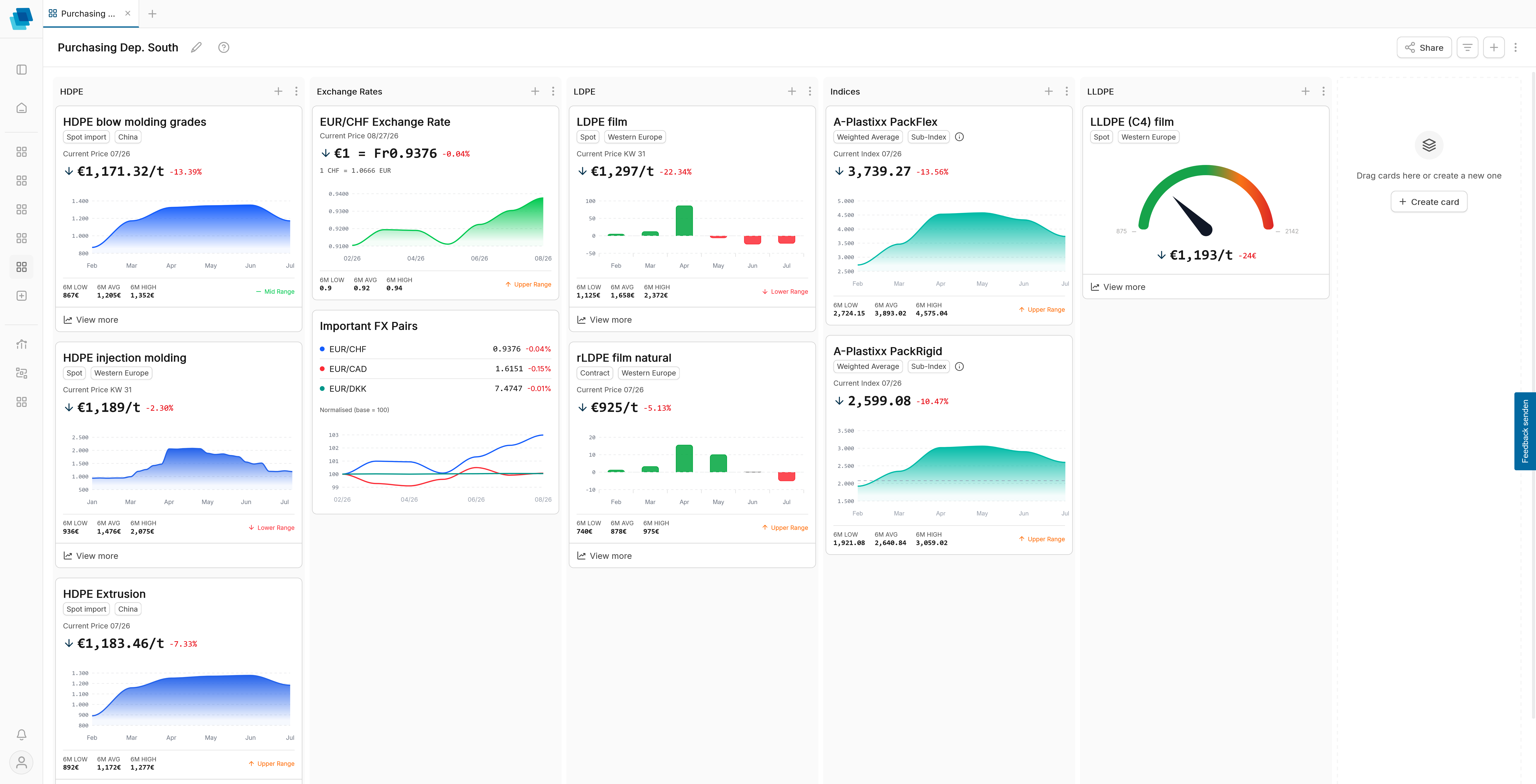
In pricenxt, base chemicals price data can be analysed in a structured way using configurable filters, interactive charts, and boards.
- Variant comparison: different price series can be set against one another in a single chart.
- Period analysis: you choose the observation period freely and add trend lines or regressions.
- Saving to boards: relevant analyses can be saved as a card on a board and shared.
Track market trends. Free of charge.
Use our Plastixx and A-Plastixx indices free of charge, with no time limit. Track price developments for standard and engineering plastics, as well as across selected application markets.