Polymer price data for large household appliances / white goods
Large household appliances are made in large series and combine structural, visible and insulating components in a range of plastics – material prices are a central cost driver in white goods.
Companies that rely on pricenxt









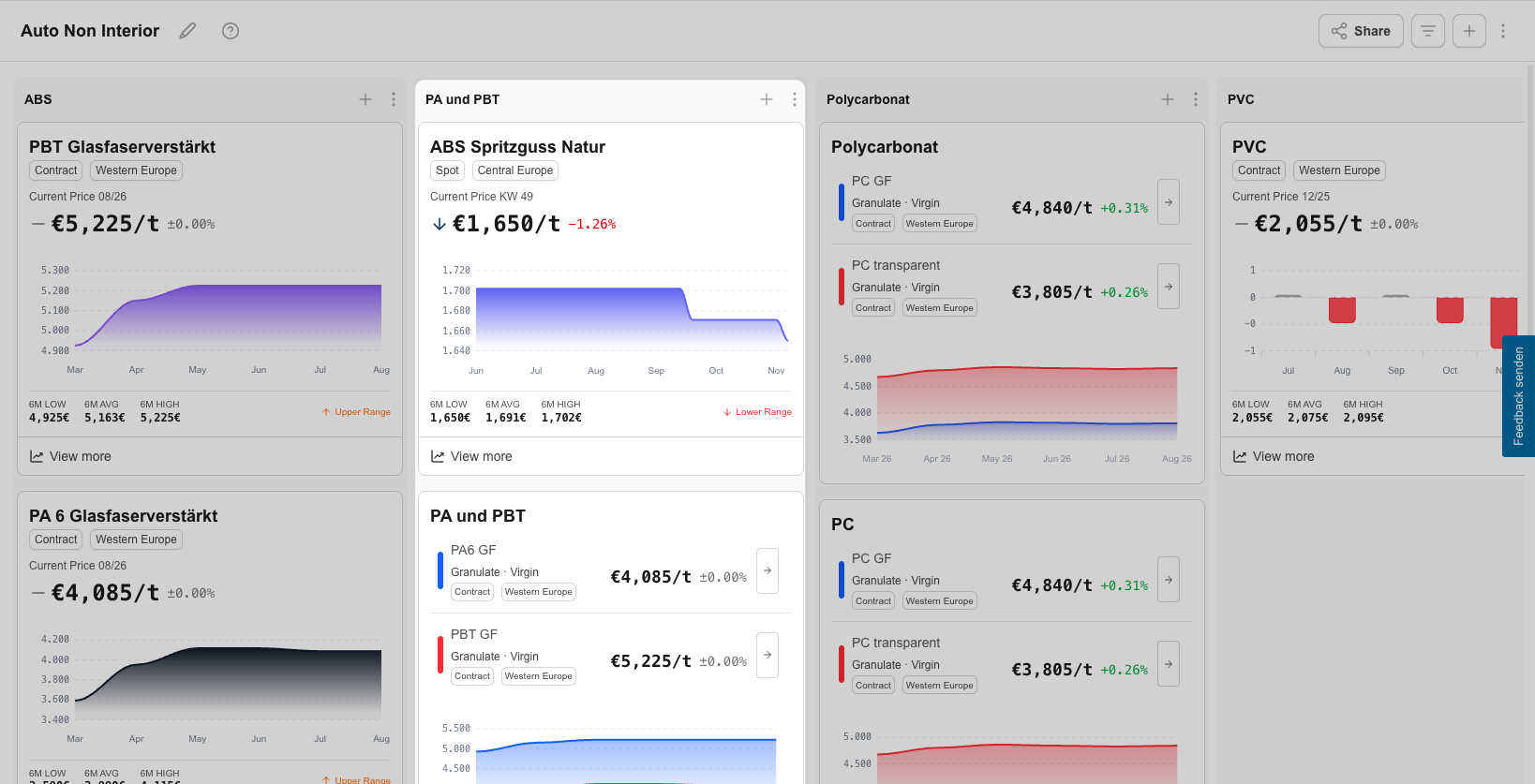
pricenxt in the large household appliances / white goods sector
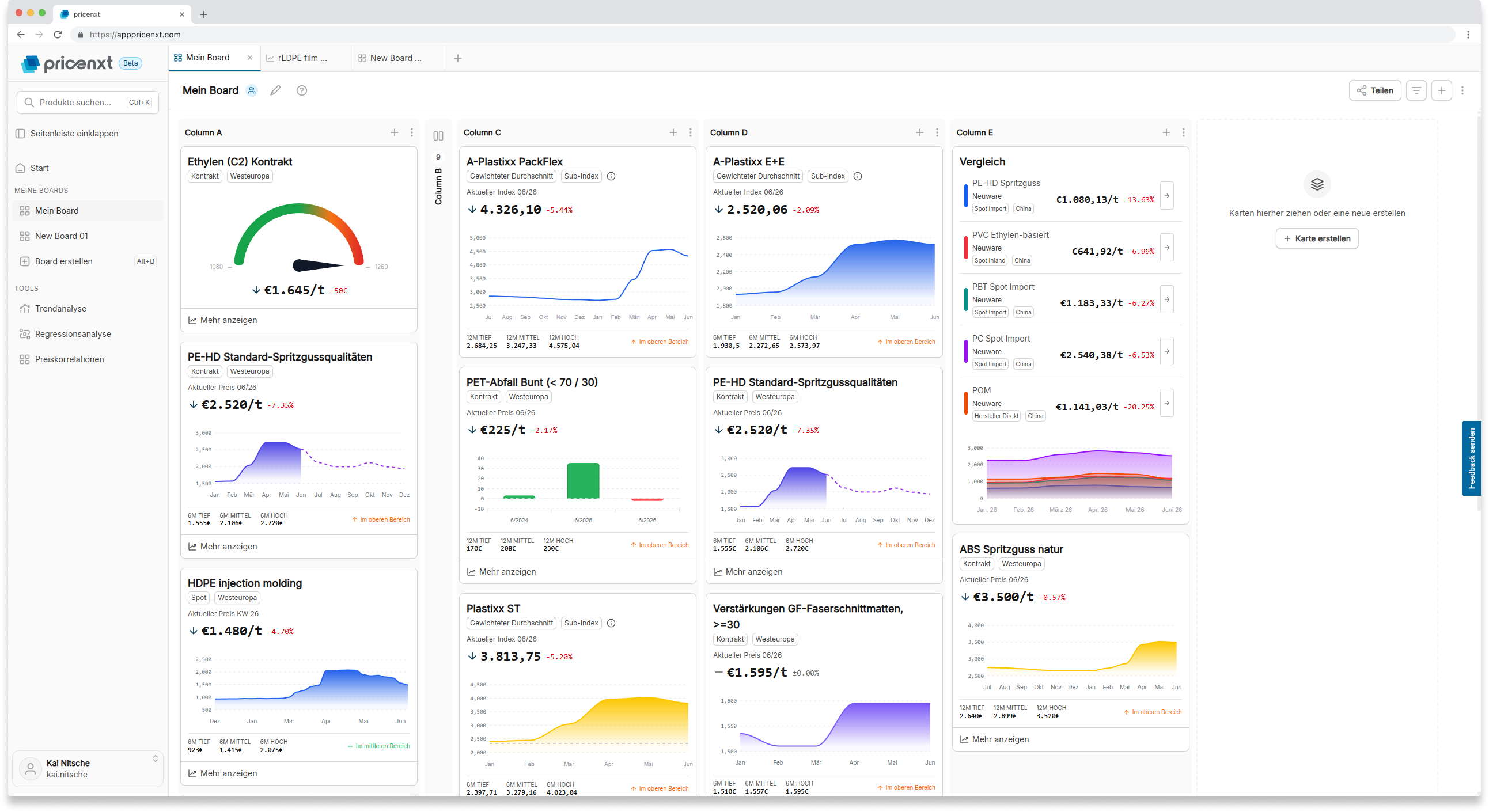
With pricenxt Analytics, teams capture price developments faster, compare price series, and build up their own structured market monitoring.
Why polymer prices matter for large household appliances / white goods:
White goods rely on large volumes of very different plastics; where unit numbers are high, price movements in PP, HIPS, ABS or PUR foam have a noticeable effect on production costs.
Several competing materials: PP, HIPS, ABS and PUR are specified depending on the component – and their prices develop differently.
High volume throughput: with series products, even a small price difference decides the total cost.
A reliable basis for calculation: current price data makes quotations and budgets more robust.
Recycled, revalued, repriced: PCR plastics to 2032
pricenxt. Try it for 30 days.
Use pricenxt free for 30 days. Analyse price movements, forecasts and much more.
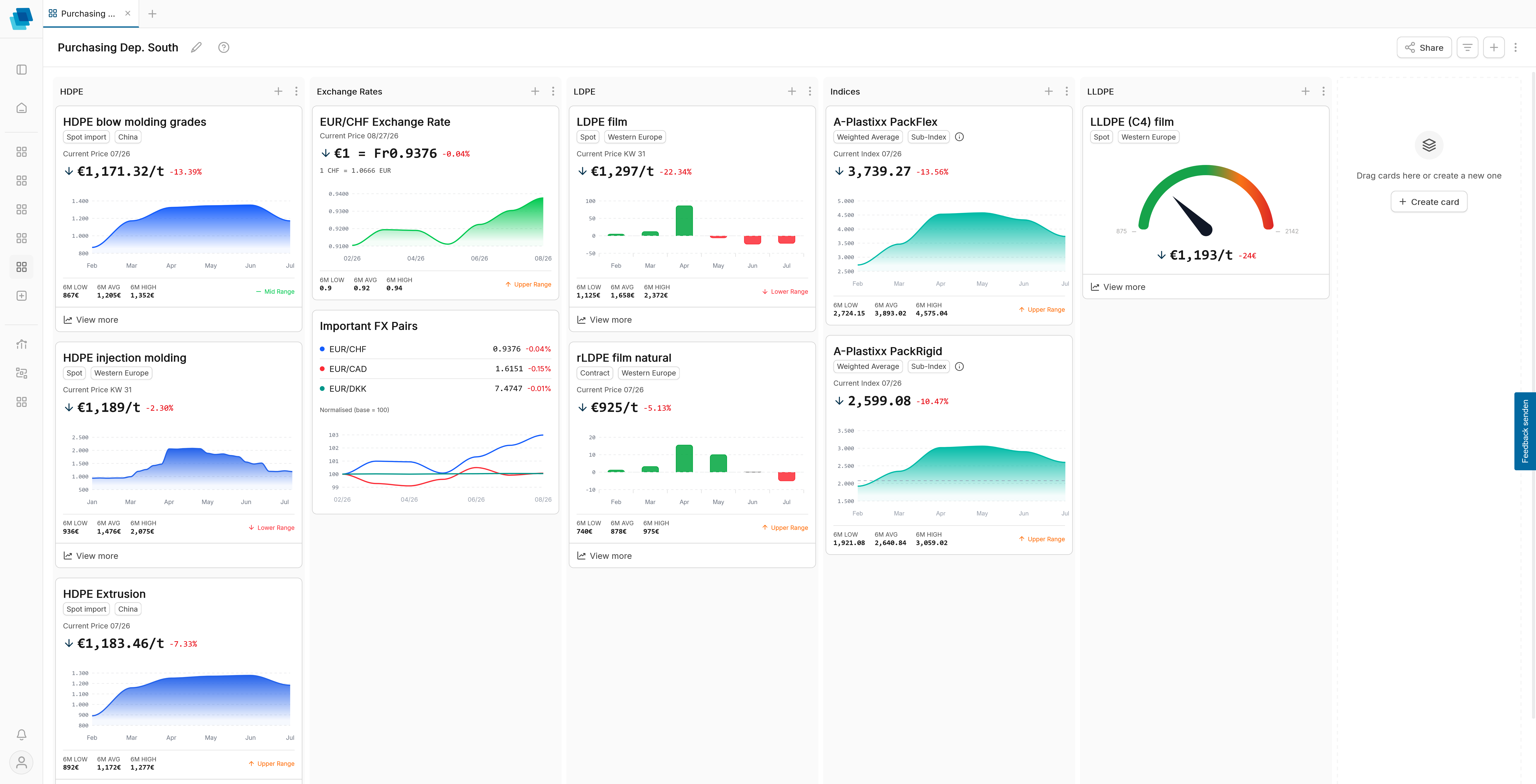
Track market trends. Free of charge.
Use our Plastixx and A-Plastixx indices free of charge, with no time limit. Track price developments for standard and engineering plastics, as well as across selected application markets.