Polymer price data for irrigation
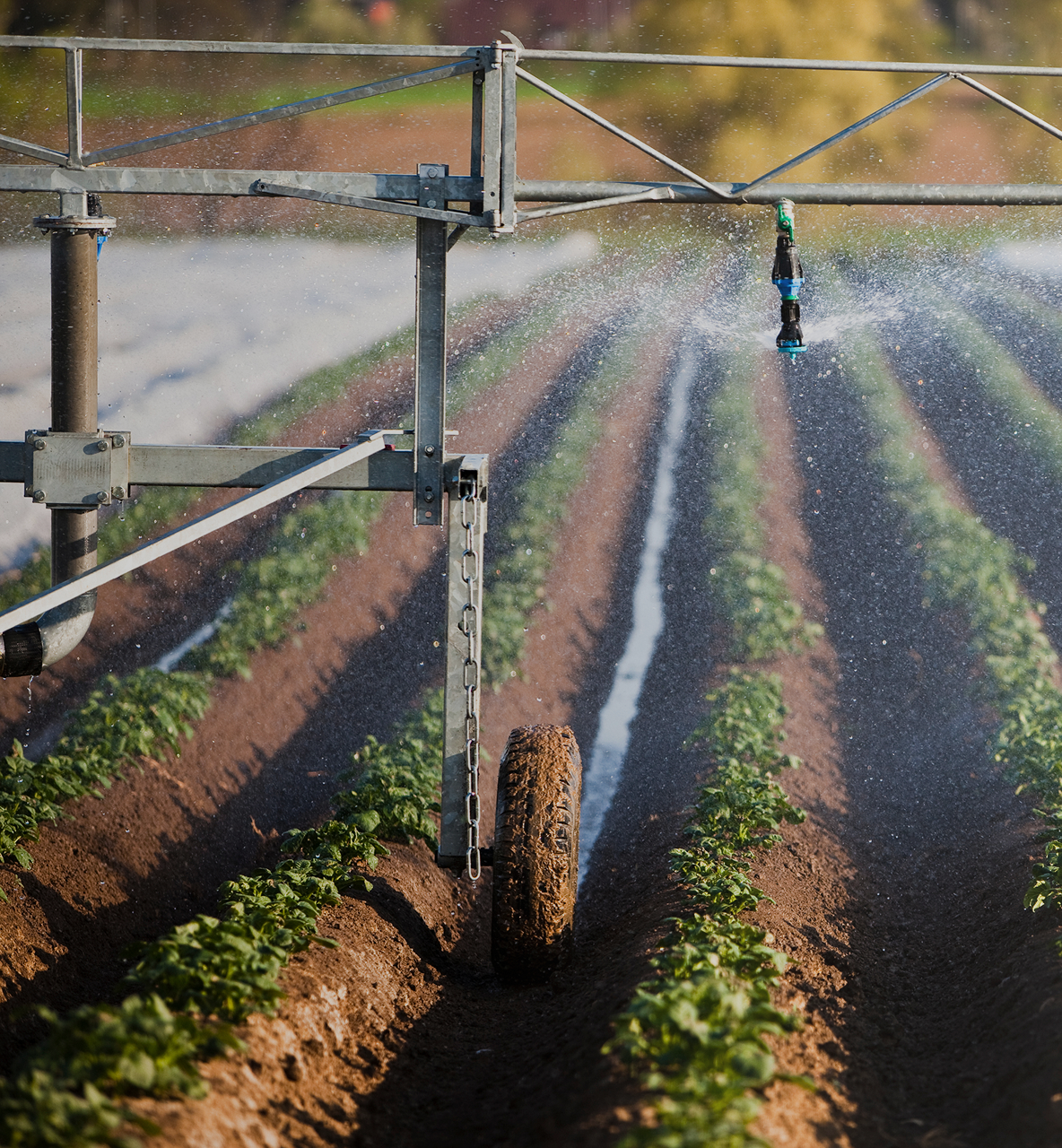
Drip lines and distribution pipes for irrigation are made predominantly from polyethylene, pipe systems also from PVC; polypropylene is frequently used for fittings. The material price determines a large share of the cost of these high-volume systems.
Companies that rely on pricenxt









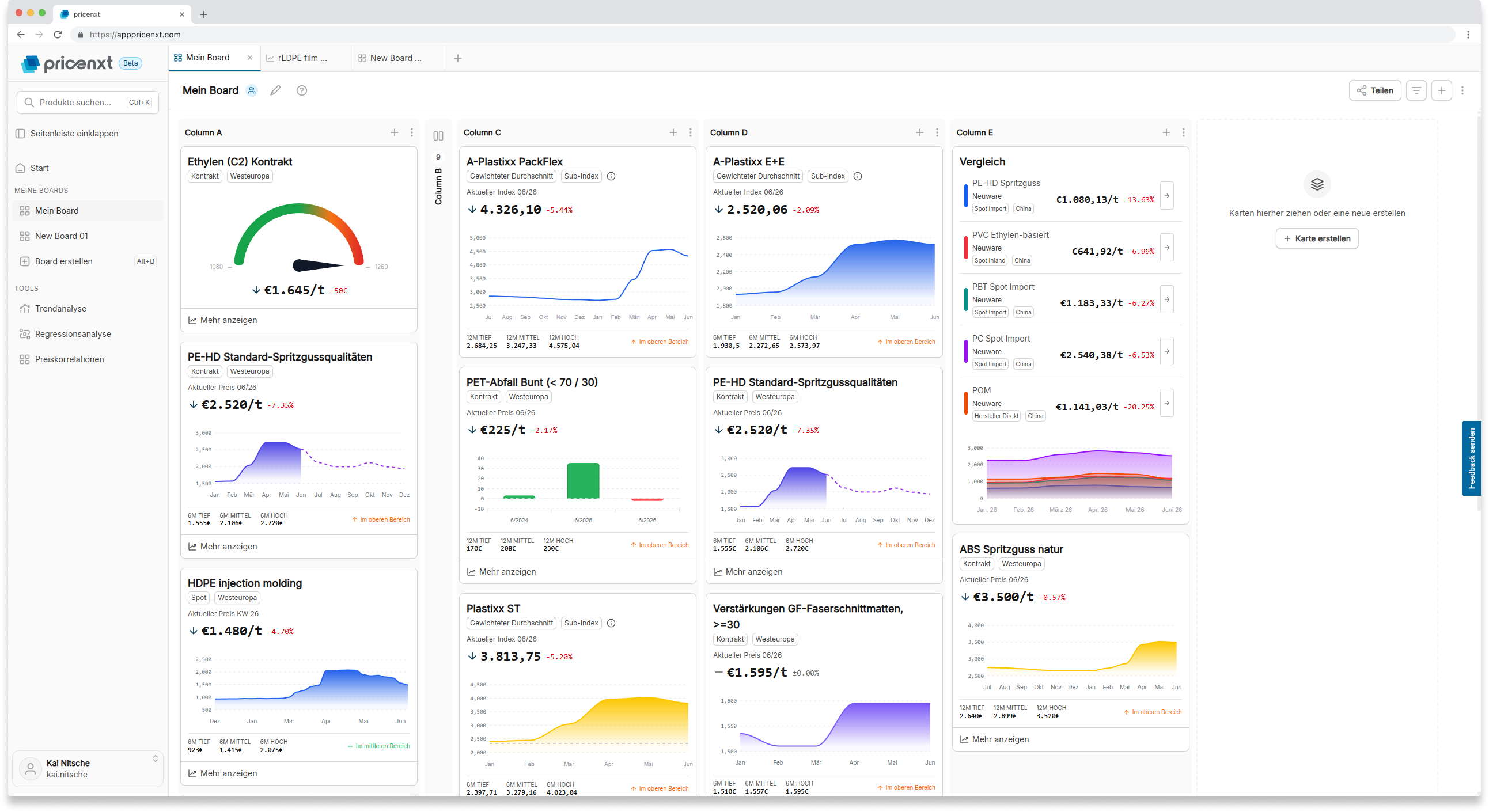
pricenxt in the irrigation sector
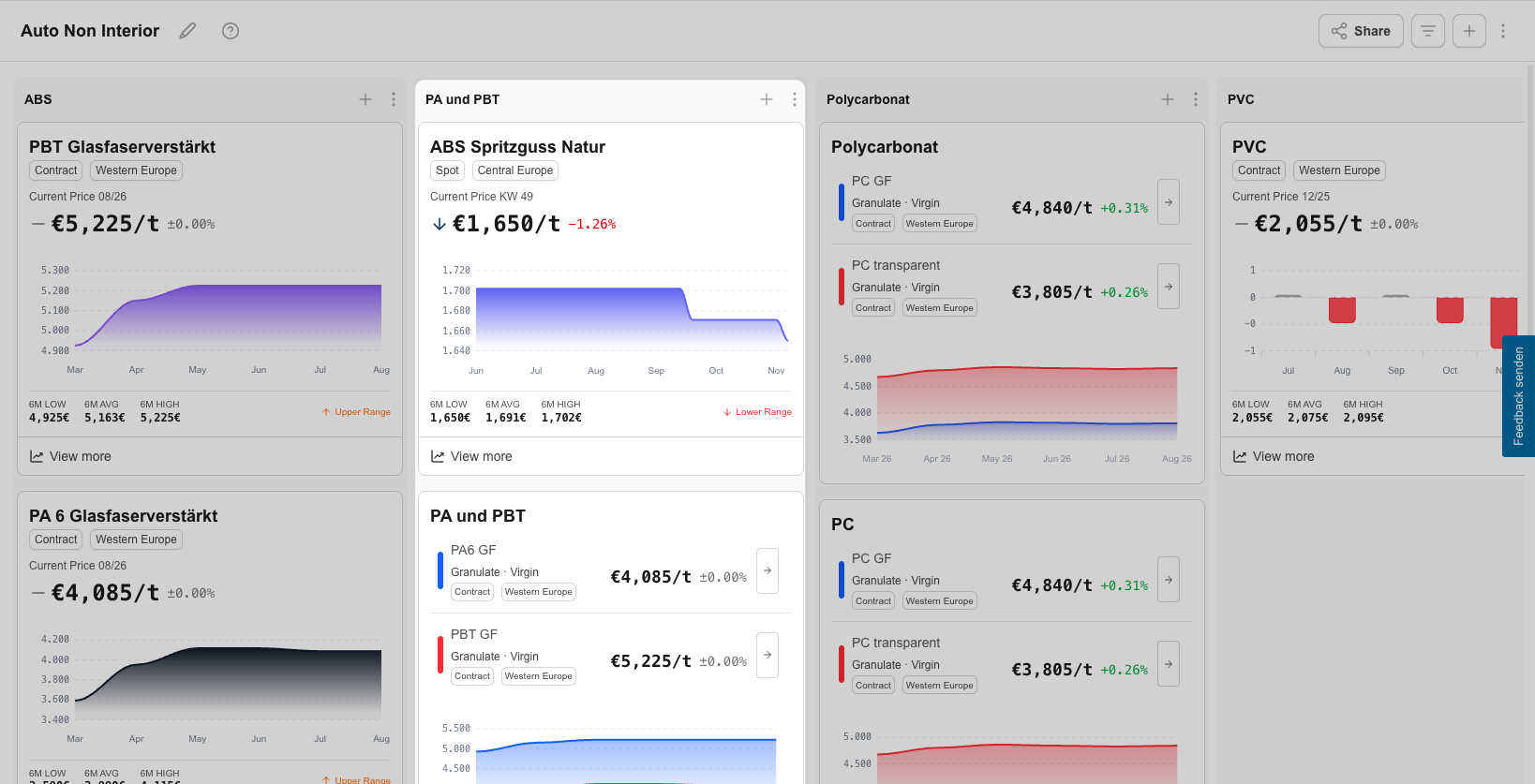
With pricenxt Analytics, teams capture price developments faster, compare price series, and build up their own structured market monitoring.
Why polymer prices matter for irrigation:
Irrigation systems require large volumes of pipes, hoses, and moulded parts; the polymer price is therefore a substantial lever on production and system costs.
Continuous lengths in large volumes: pipes and drip lines are laid over many kilometres – the material price dominates the cost.
Several materials in one system: HDPE pipes, PE drip lines, PVC pipes and PP fittings develop independently of one another in price.
Project and seasonal business: current price data make quotations and tenders calculable.
Recycled, revalued, repriced: PCR plastics to 2032
pricenxt. Try it for 30 days.
Use pricenxt free for 30 days. Analyse price movements, forecasts and much more.
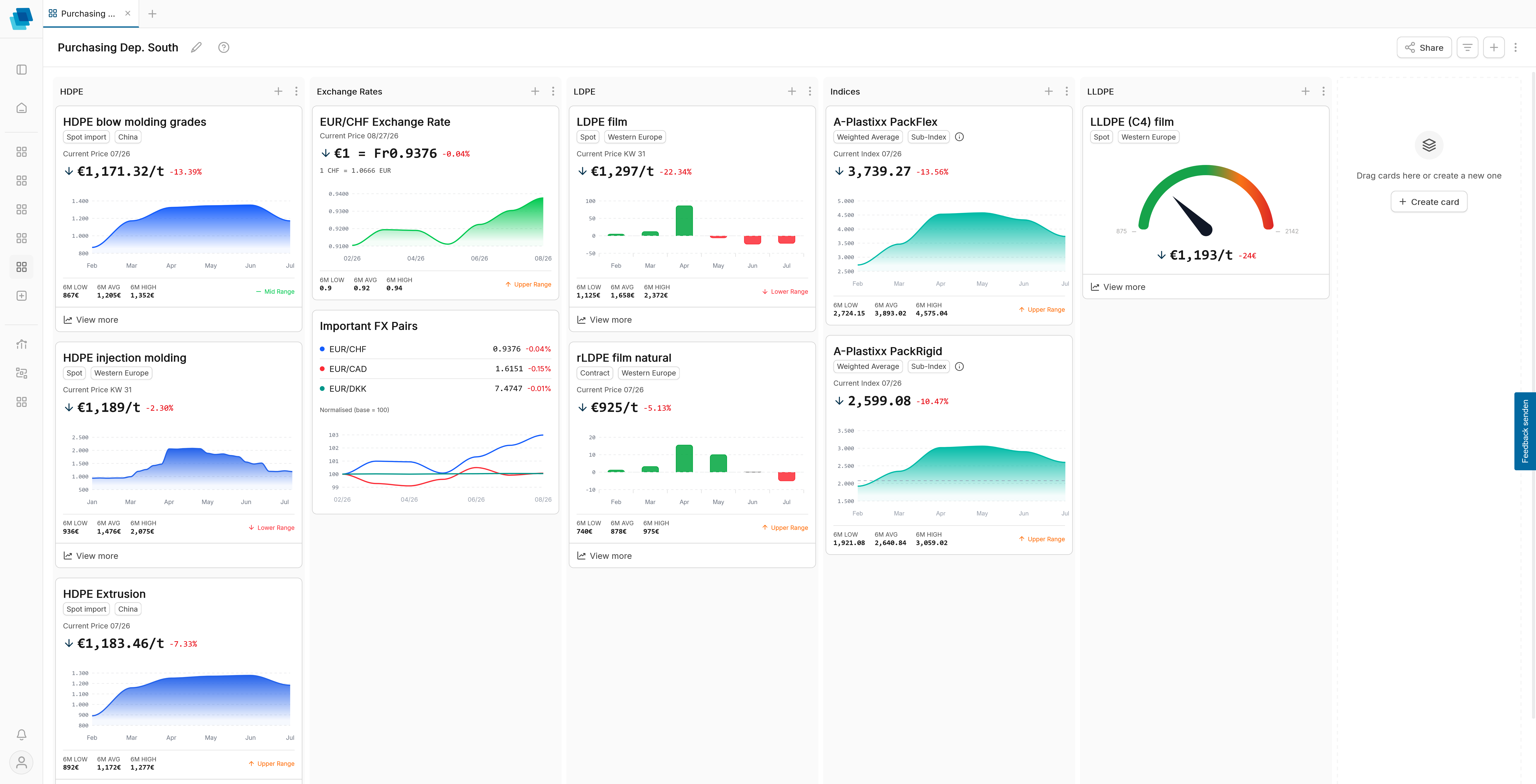
Track market trends. Free of charge.
Use our Plastixx and A-Plastixx indices free of charge, with no time limit. Track price developments for standard and engineering plastics, as well as across selected application markets.