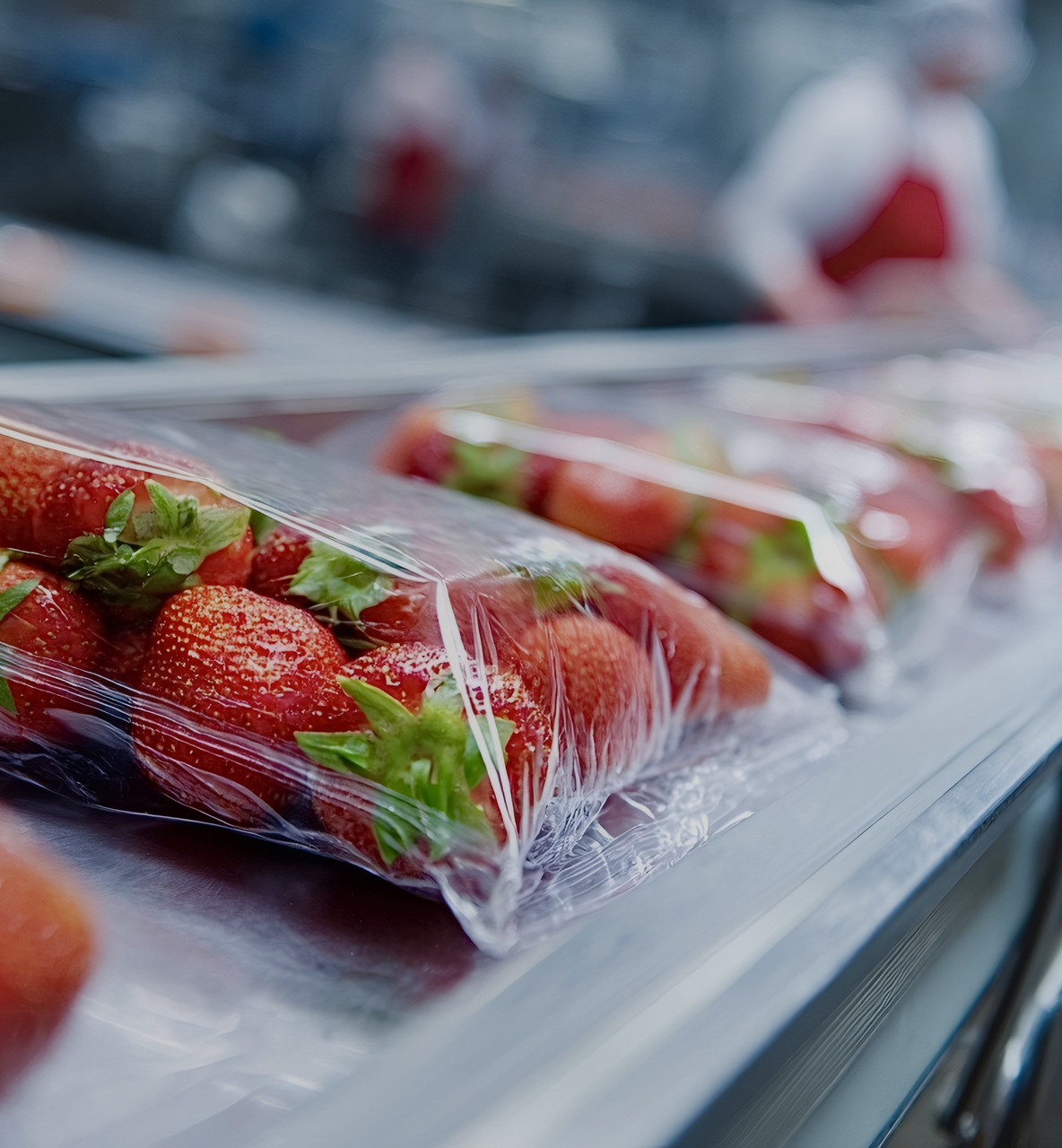
Polymer price data for food packaging
Food packaging protects products, secures shelf life and is manufactured in enormous unit numbers – material prices are a central cost driver here.
Companies that rely on pricenxt









pricenxt in the food packaging sector
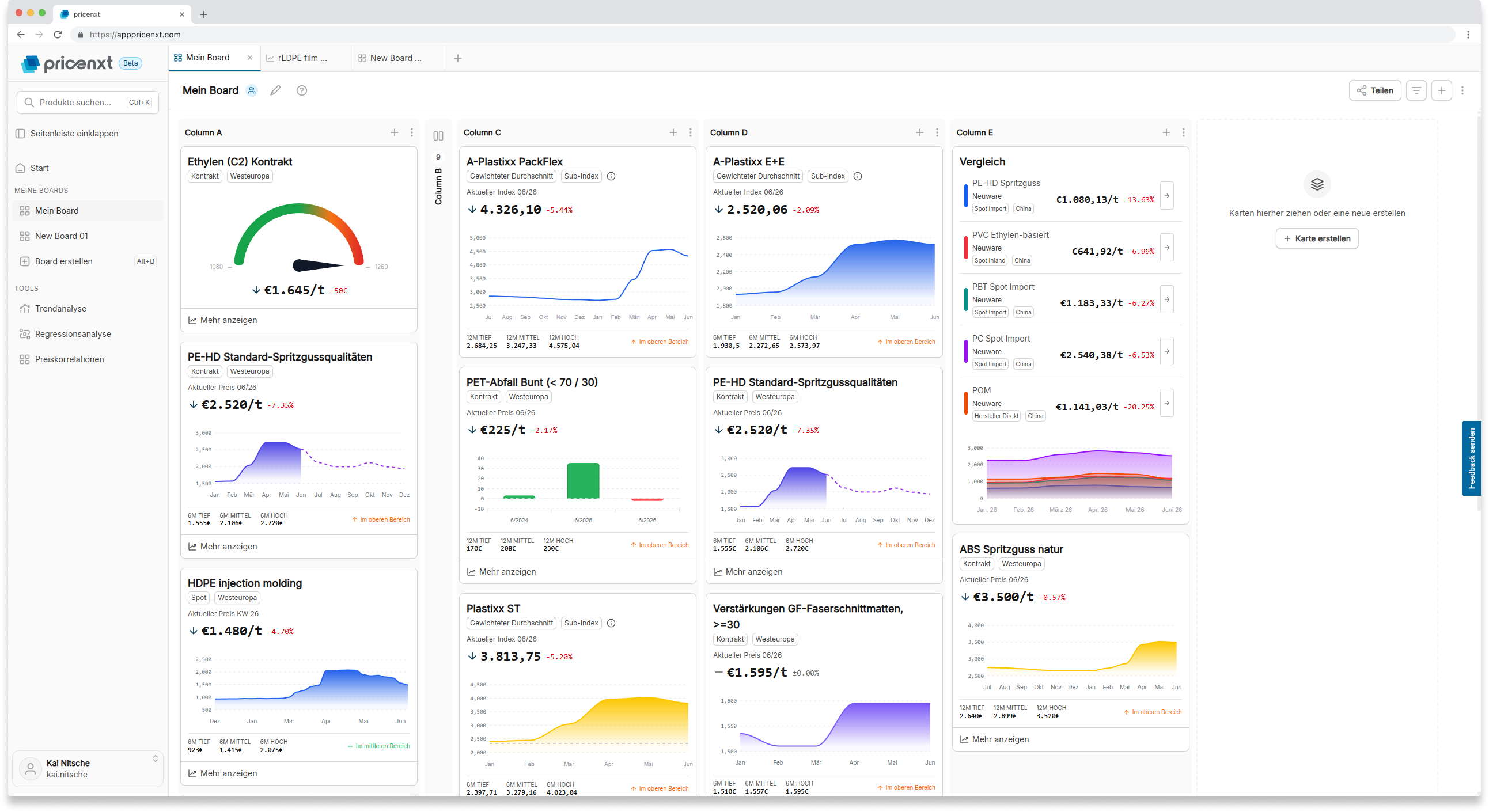
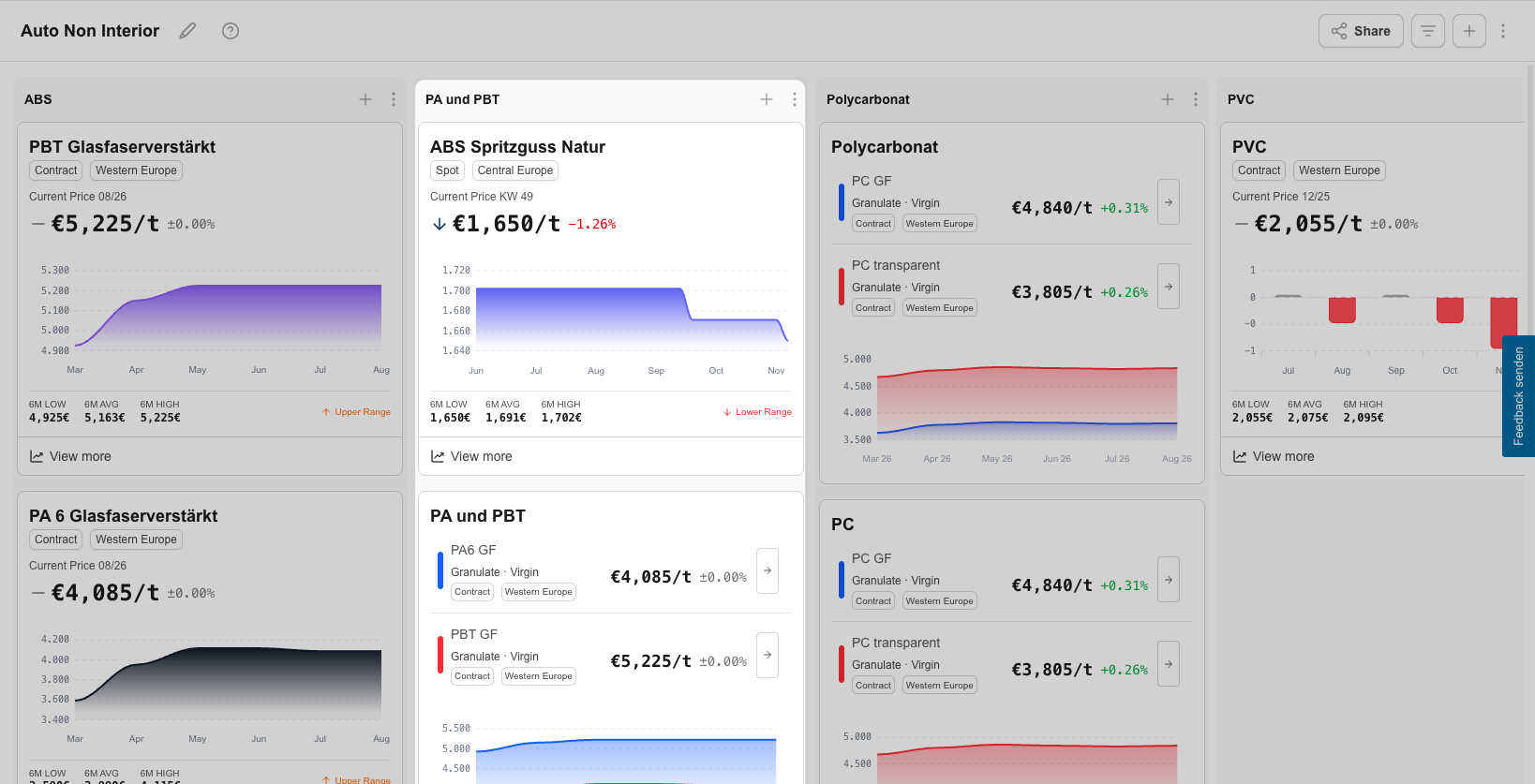
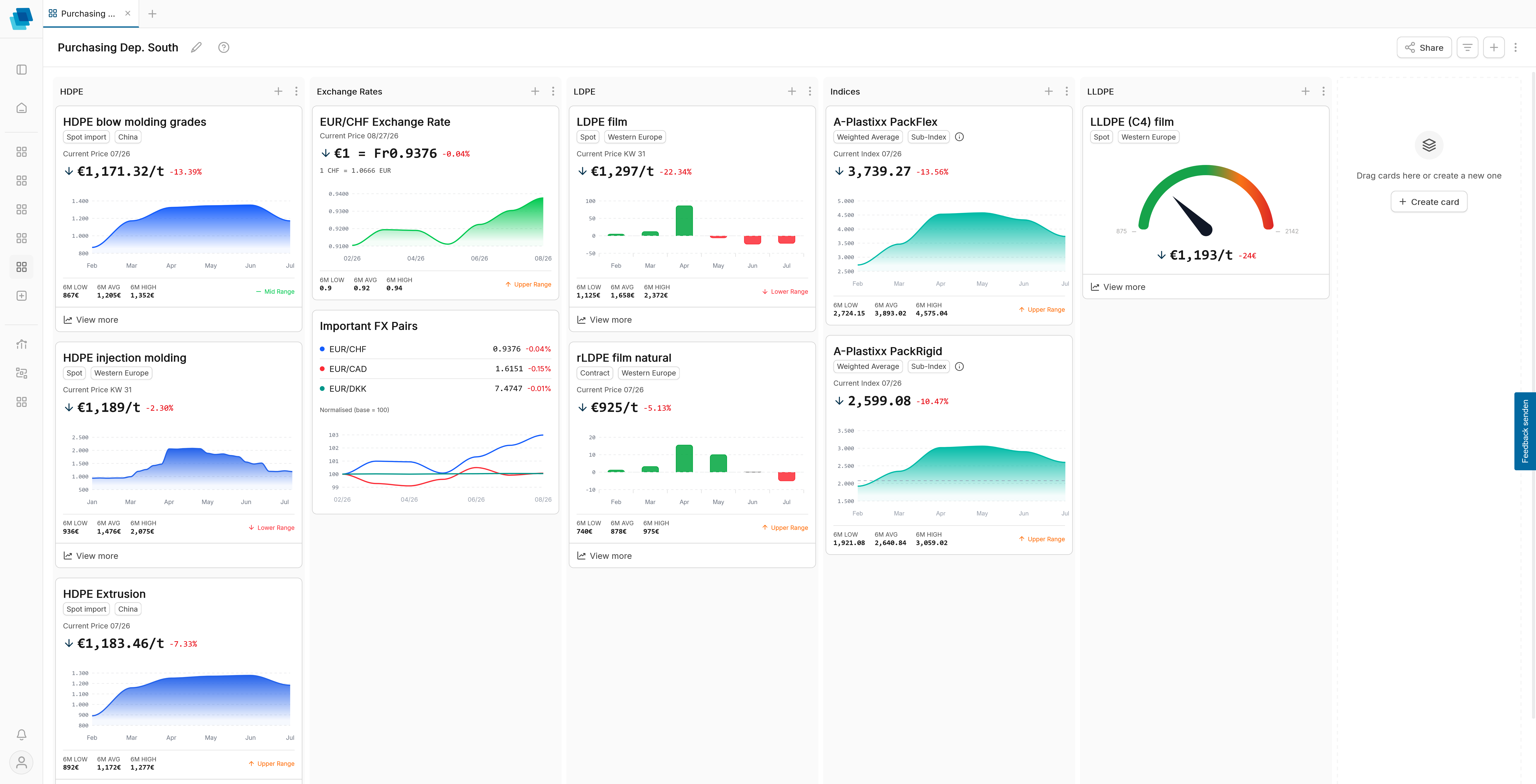
With pricenxt Analytics, teams capture price developments faster, compare price series, and build up their own structured market monitoring.
Why polymer prices matter for food packaging:
Food packaging is produced in very large volumes. Because part costs for the individual pack are low and polymer costs account for a high share of the overall calculation, price movements feed through more directly here than in other areas.
High volume throughput: for high-volume articles, price movements feed through more directly than in other areas because polymer costs make up such a high share of the overall calculation.
Several competing materials: PE, PP, PET and PS are used according to requirement – and their prices develop in different ways.
Reliable basis for calculation: current price data makes quotations and budgets more dependable.
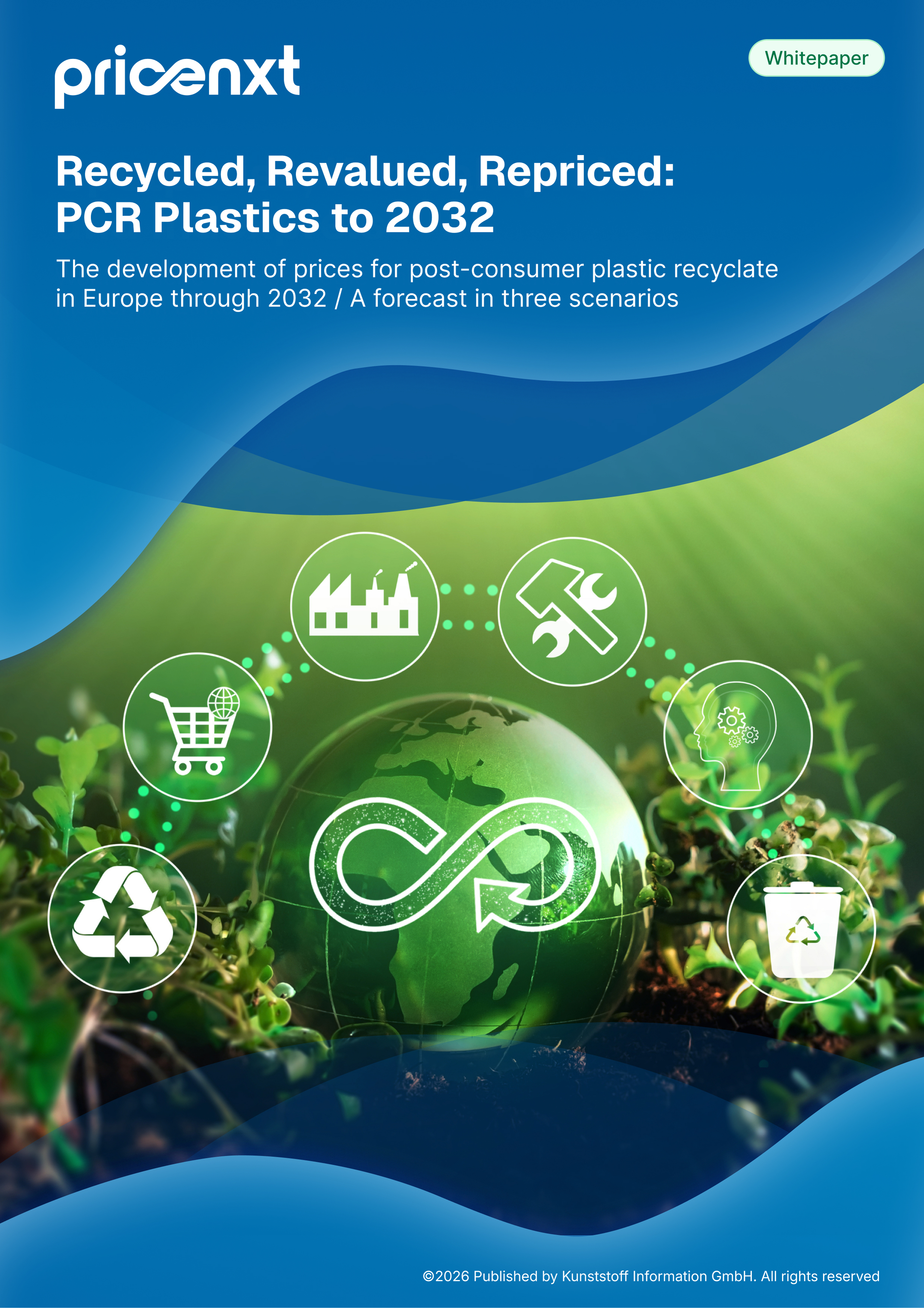
Recycled, revalued, repriced: PCR plastics to 2032
pricenxt. Try it for 30 days.
Use pricenxt free for 30 days. Analyse price movements, forecasts and much more.
Track market trends. Free of charge.
Use our Plastixx and A-Plastixx indices free of charge, with no time limit. Track price developments for standard and engineering plastics, as well as across selected application markets.