Polymer price data for civil engineering
Civil engineering is a major end-use sector for plastic pipes and insulation – price movements in the polymers used therefore feed directly into material costs and calculation.
Companies that rely on pricenxt









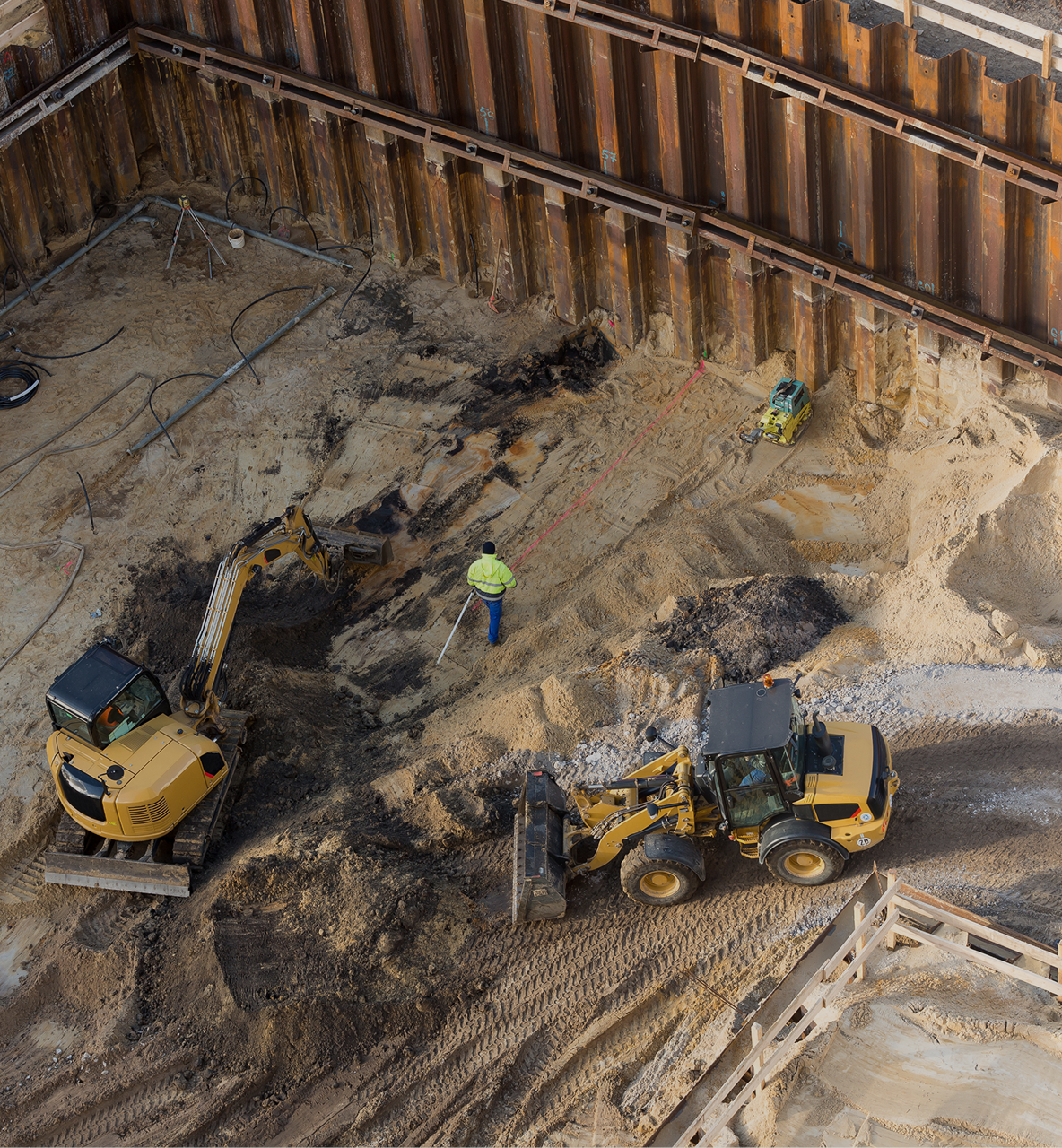
pricenxt in the civil engineering sector
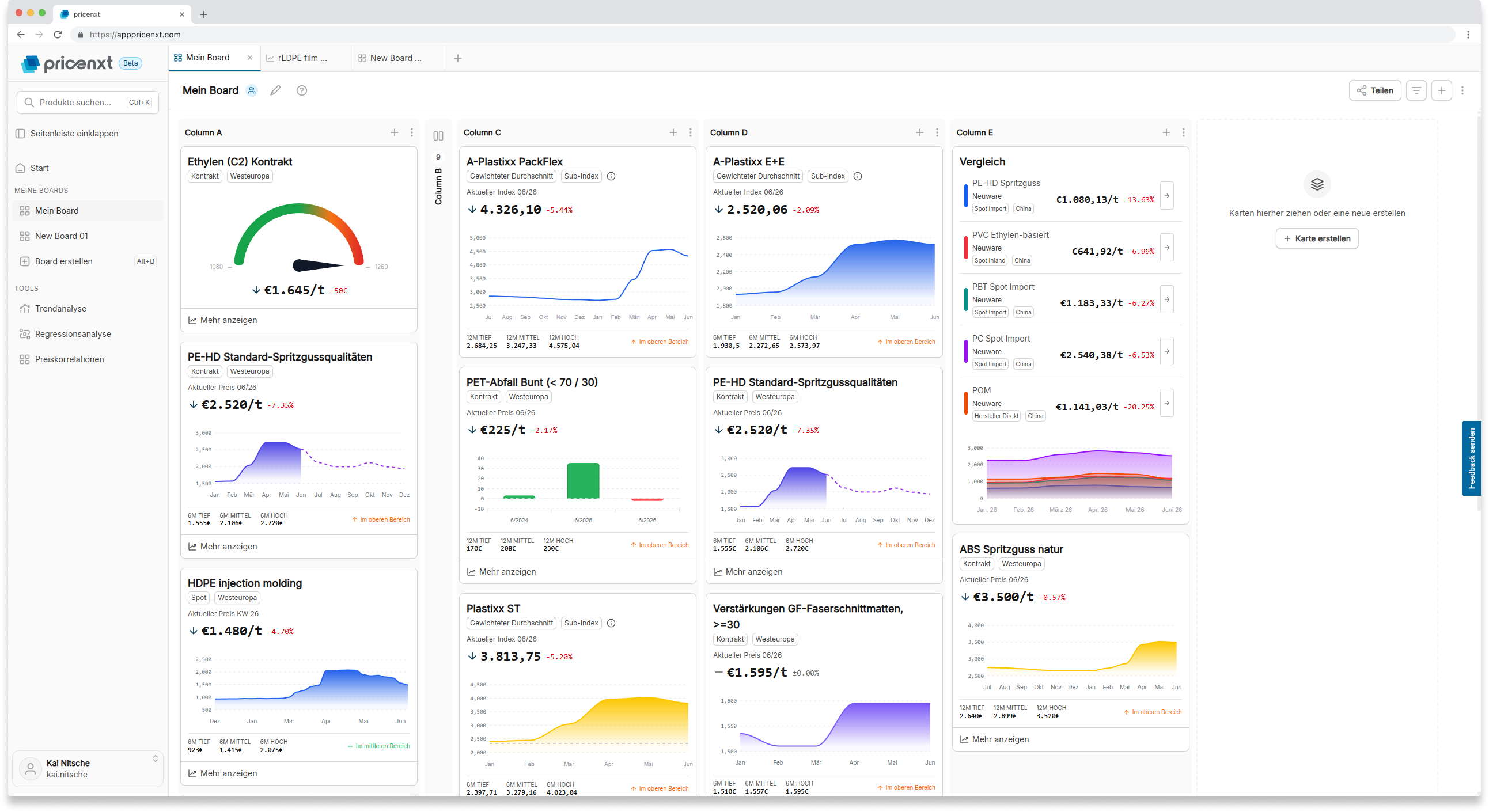
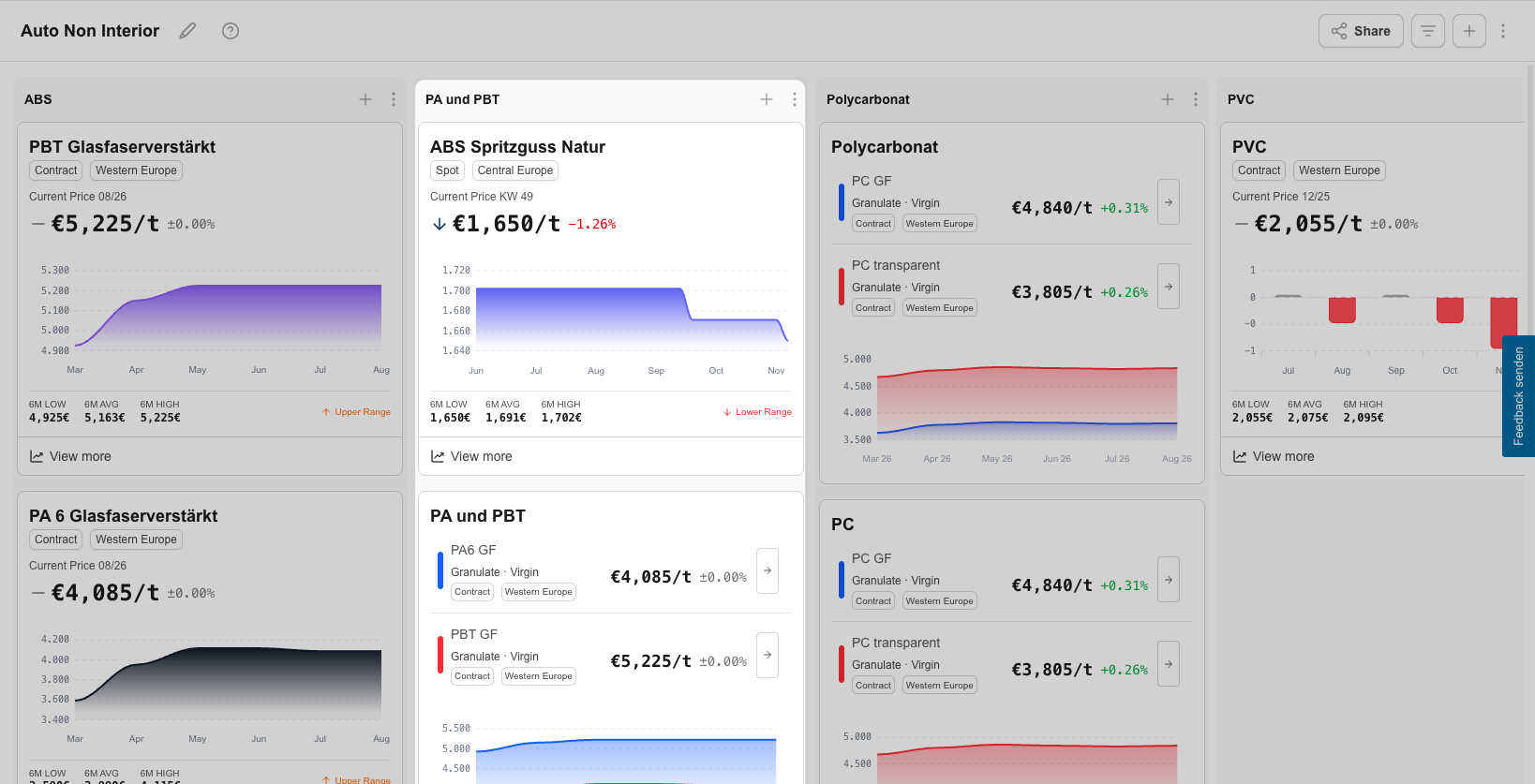
With pricenxt Analytics, teams capture price developments faster, compare price series, and build up their own structured market monitoring.
Why polymer prices matter for civil engineering:
Civil engineering projects absorb large quantities of pipes, protective materials, and insulation; even small price movements in the polymers used have a noticeable effect on material costs and calculation.
High material cost share: the polymer price determines a large part of the cost of pipelines, chambers, and insulation.
Long project timelines: months often pass between tender and execution – price trends can shift calculation and margin considerably.
Predictable procurement: transparent price trends make tenders, budgets, and negotiations easier.
Recycled, revalued, repriced: PCR plastics to 2032
Relevant segments for civil engineering
Explore how pricenxt supports individual civil engineering segments – from foundations to pipes.
-
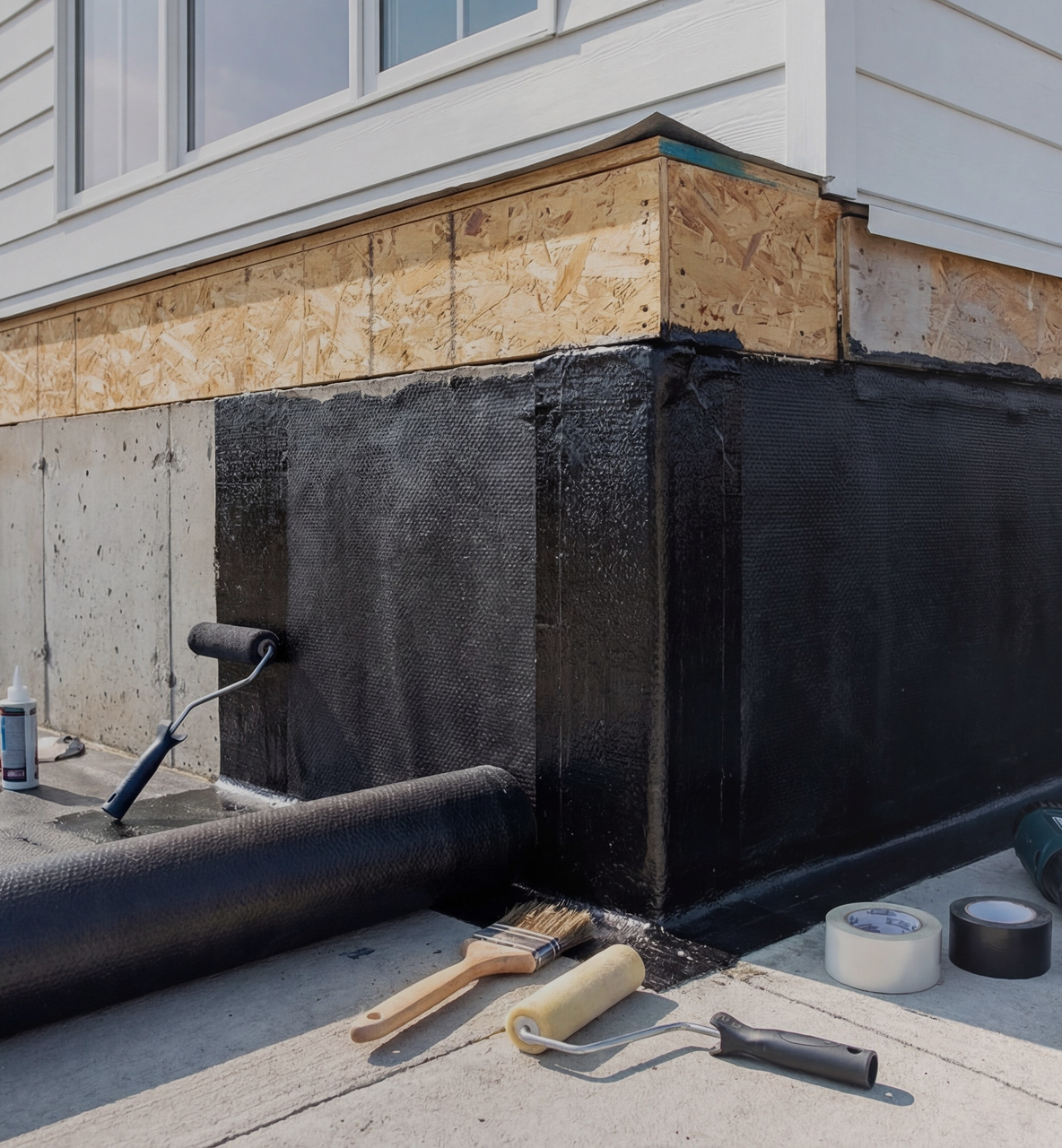
FoundationsFoundations use large volumes of EPS, PE and PVC for perimeter insulation, waterproofing, and drainage – price movements feed directly into construction costs.Learn more
-
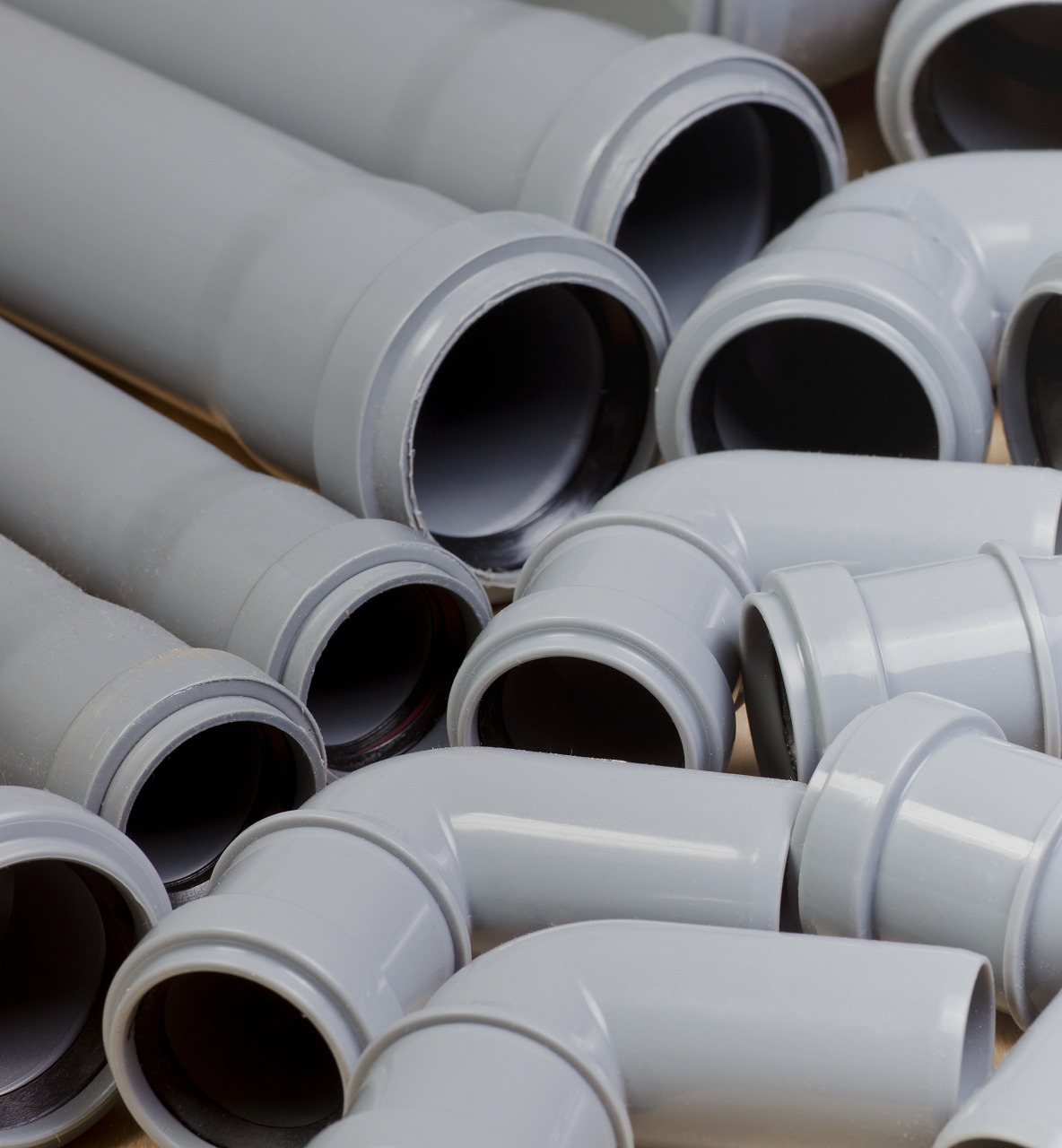
PipesPipes consist predominantly of HDPE, PVC, and PP – price movements feed directly into the cost per metre.Learn more
pricenxt. Try it for 30 days.
Use pricenxt free for 30 days. Analyse price movements, forecasts and much more.
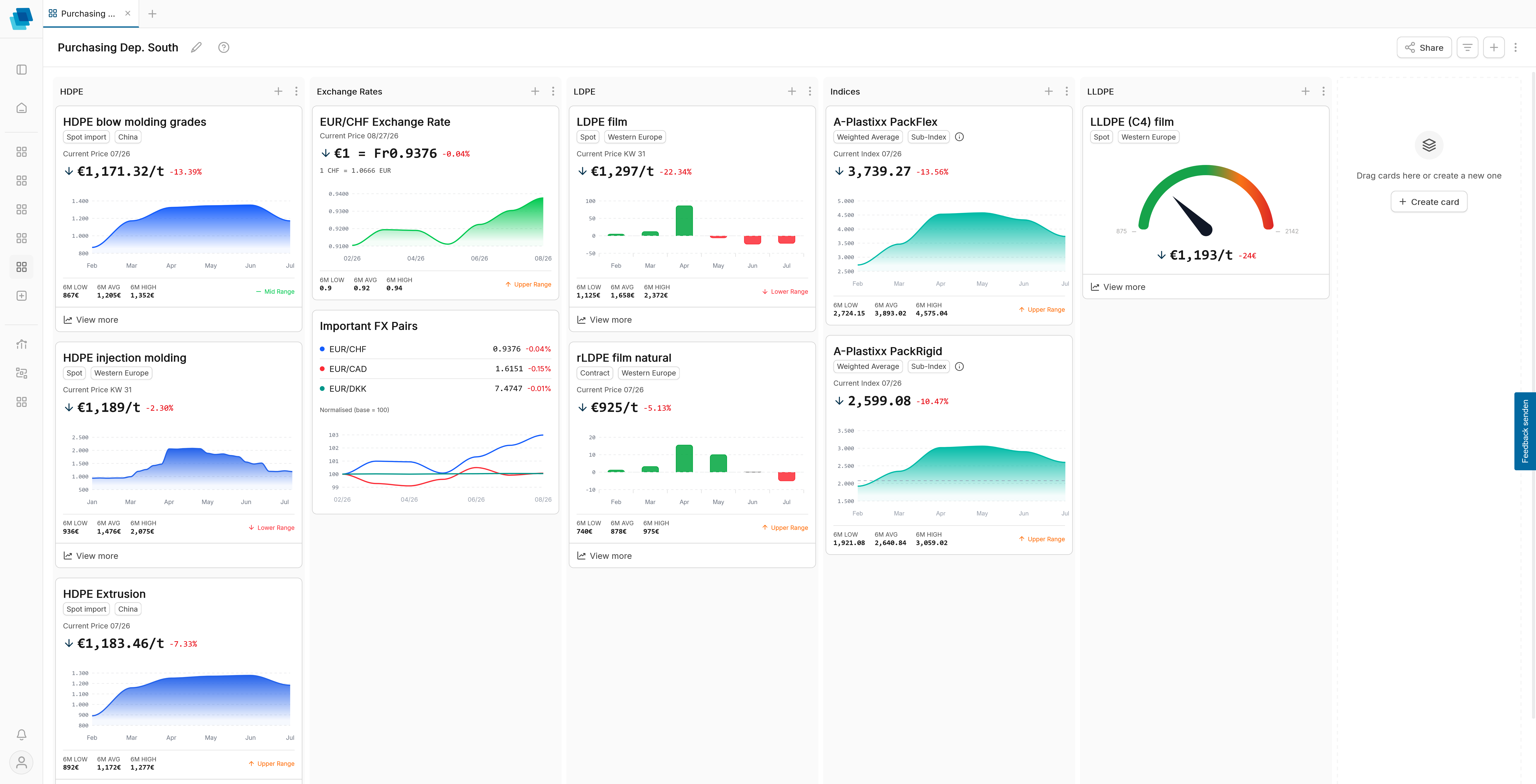
Track market trends. Free of charge.
Use our Plastixx and A-Plastixx indices free of charge, with no time limit. Track price developments for standard and engineering plastics, as well as across selected application markets.