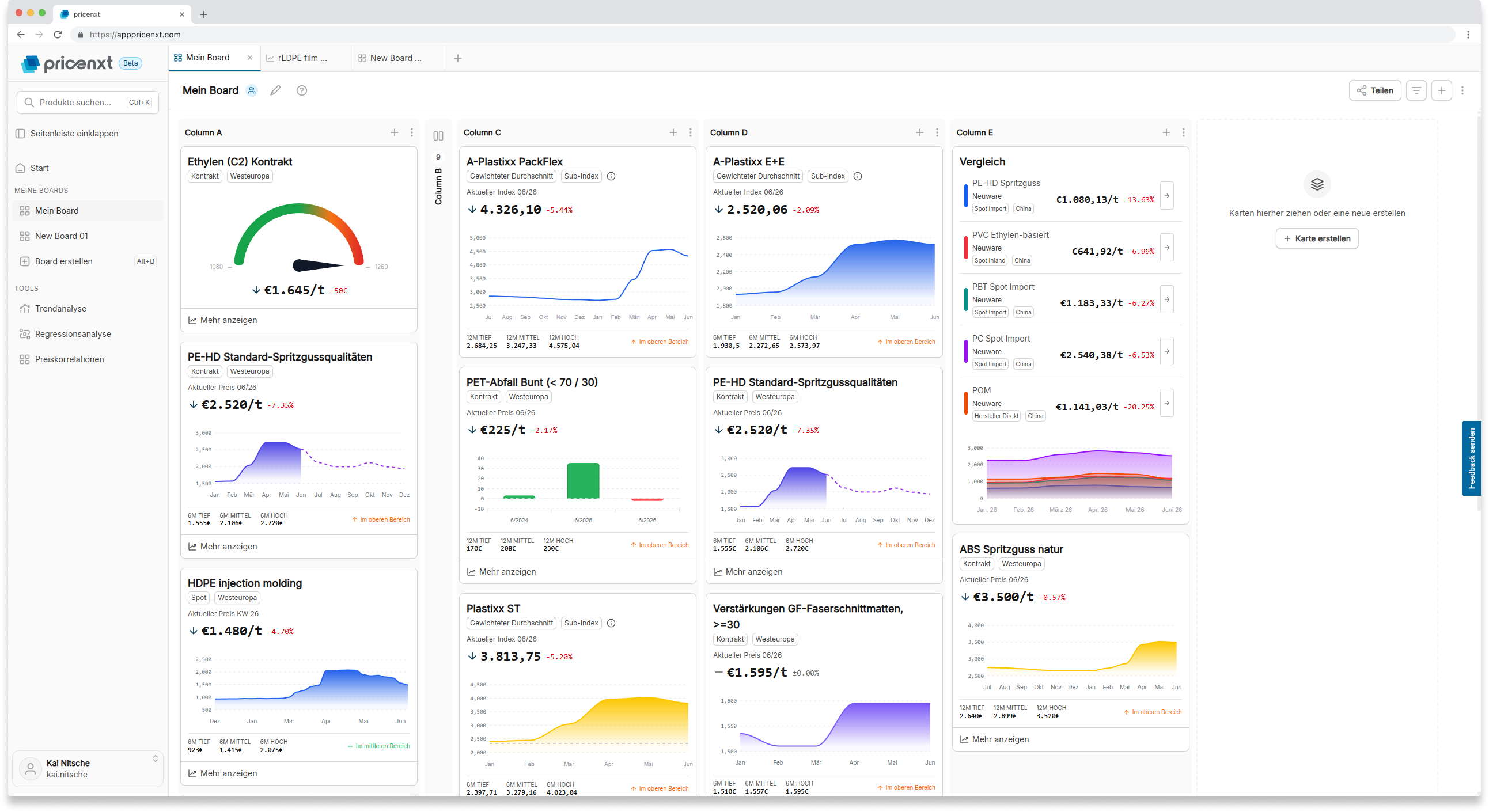
Polymer price data for battery systems
Battery modules need lightweight, dimensionally stable, and flame-retardant plastics for housings, cell holders, and trays – PA, PBT, PP compounds, and PC/ABS determine component costs here.
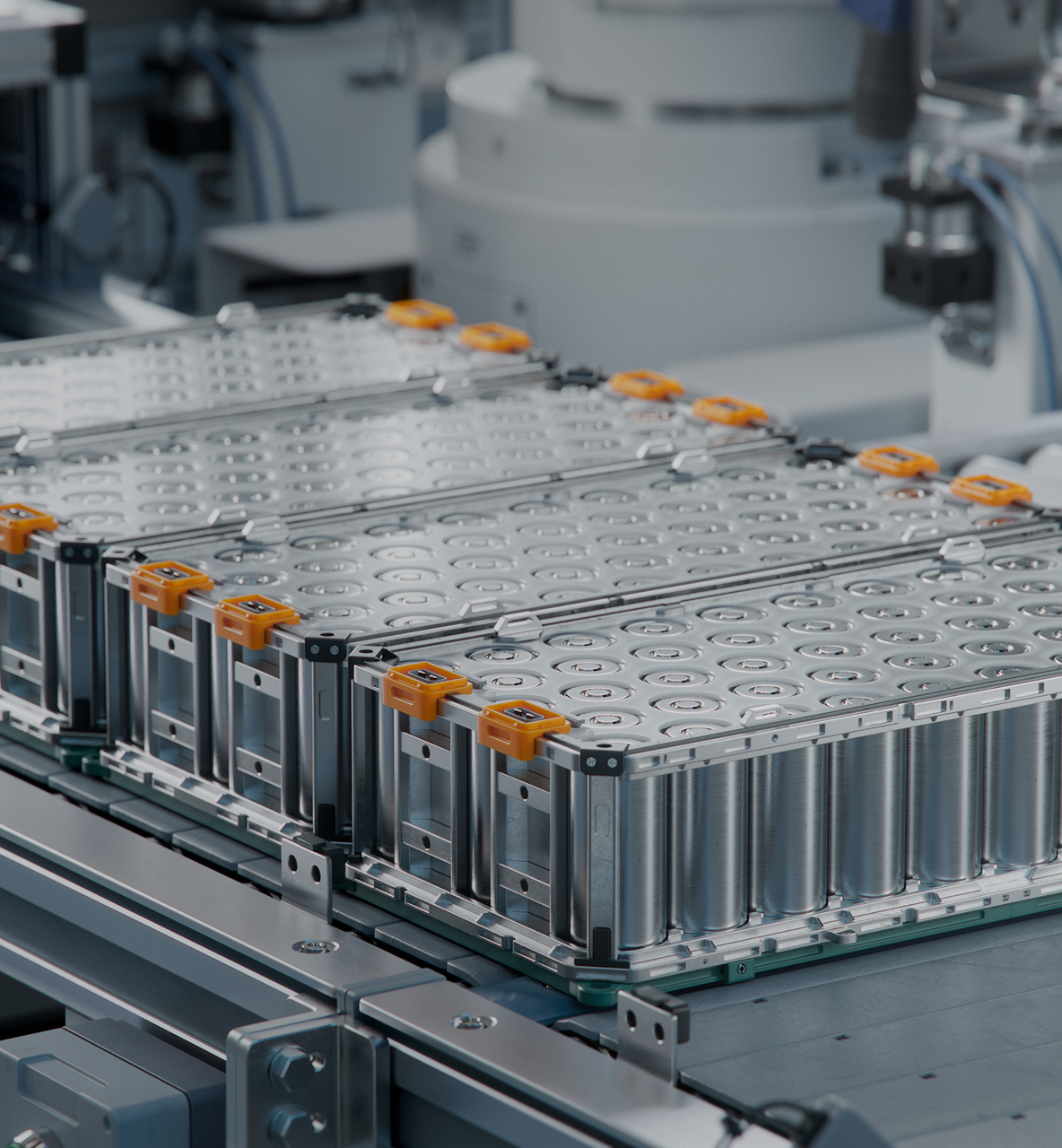
Companies that rely on pricenxt










pricenxt in the battery systems sector
With pricenxt Analytics, teams capture price developments faster, compare price series, and build up their own structured market monitoring.
Why polymer prices matter for battery systems:
With the electromobility ramp-up, battery systems are being manufactured in sharply rising volumes; price movements in the thermoplastics used feed straight through to material costs.
Large components, high volumes: module housings, and trays consume a lot of material – the polymer price shapes production costs noticeably.
Flame retardancy as a price factor: flame-retardant and reinforced compounds follow their own price path compared with standard grades.
Competition between materials: PA GF, PP compounds, and PC/ABS compete depending on the component – and their prices move in different directions.
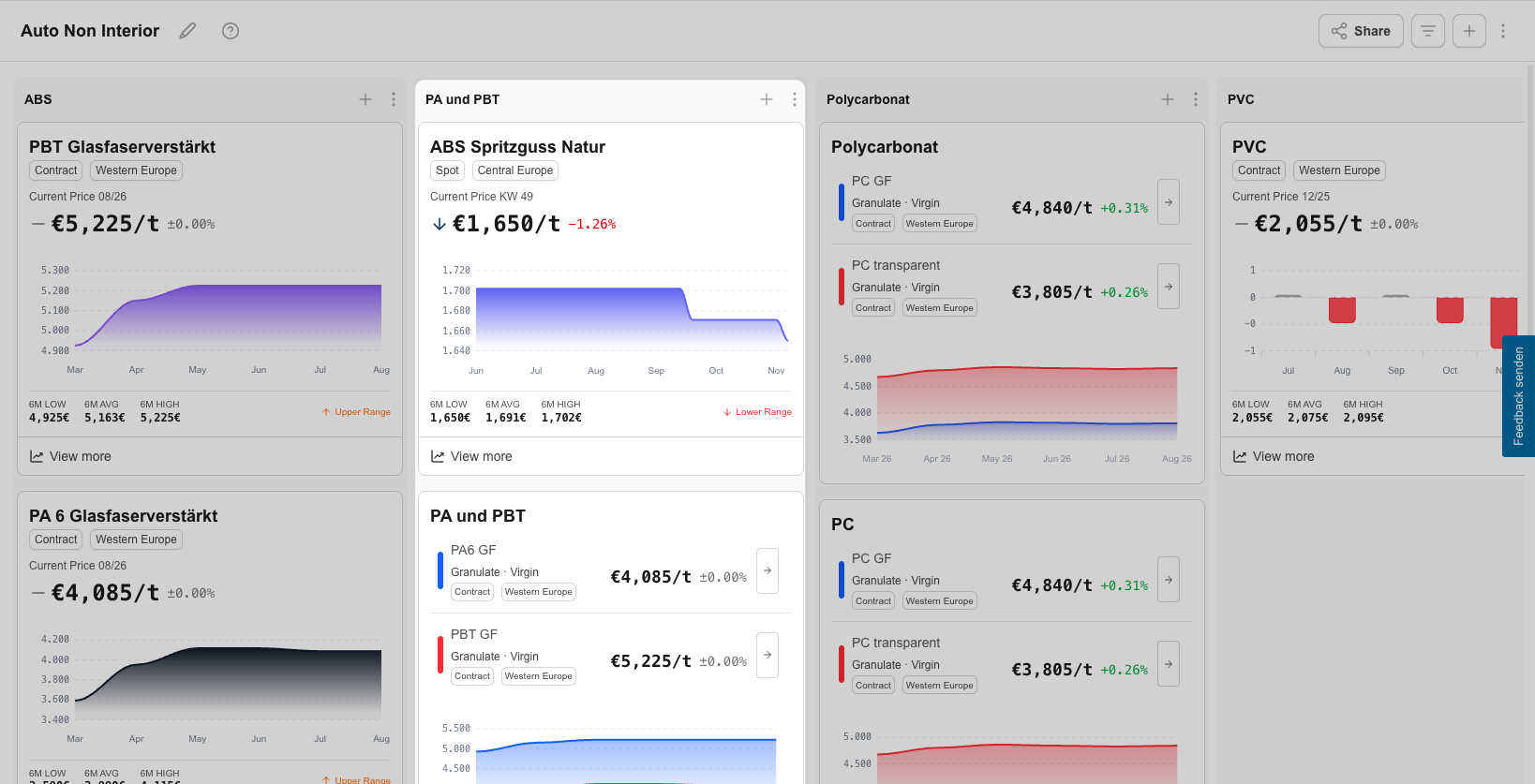
Recycled, revalued, repriced: PCR plastics to 2032

pricenxt. Try it for 30 days.
Use pricenxt free for 30 days. Analyse price movements, forecasts and much more.
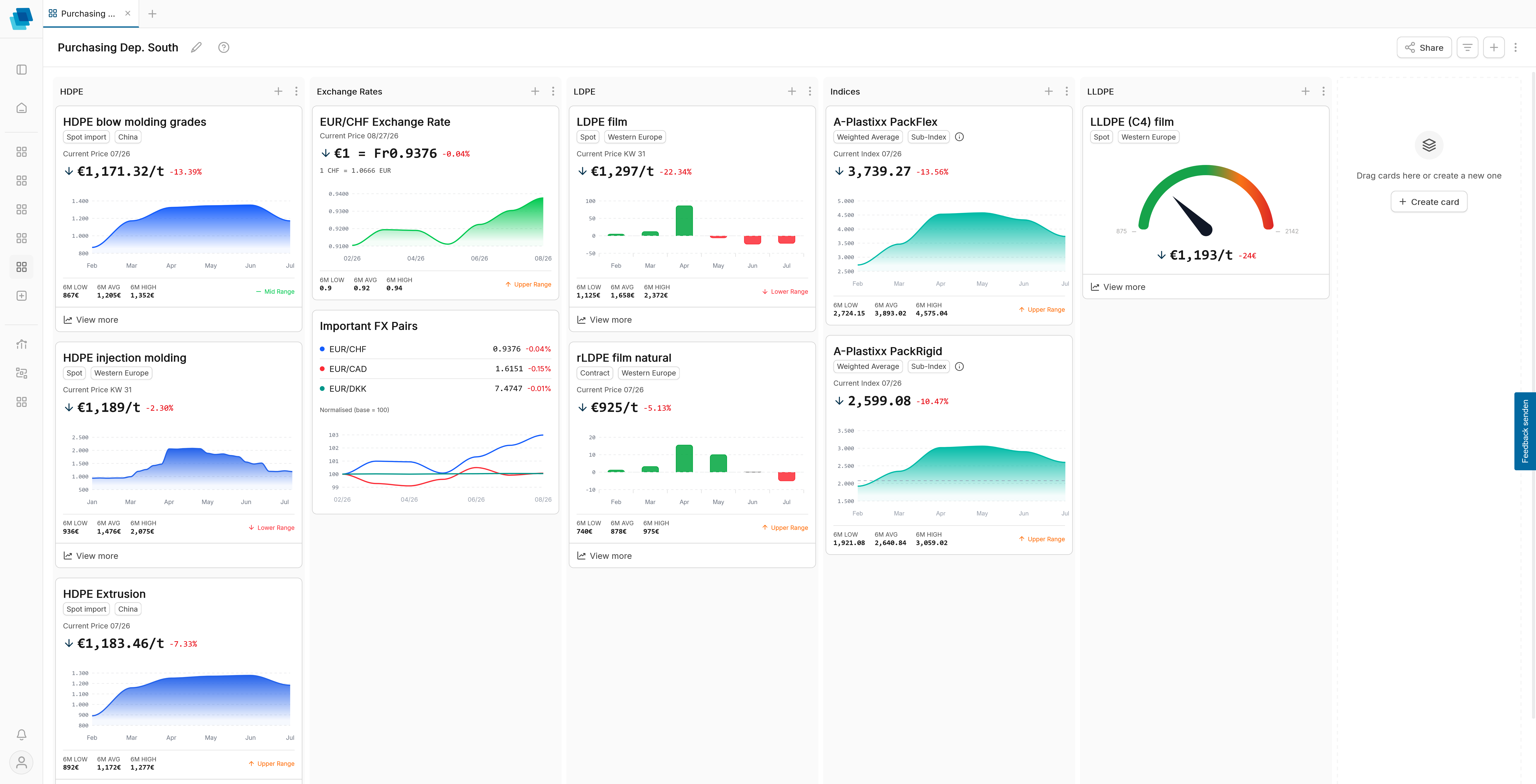
Track market trends. Free of charge.
Use our Plastixx and A-Plastixx indices free of charge, with no time limit. Track price developments for standard and engineering plastics, as well as across selected application markets.